Cost of Building a Granny Flat: What You Need to Know
If you’re thinking about adding a granny flat to your property, one of the first questions that comes up is cost. It sounds simple, but the answer can vary quite a bit depending on your design, land, and how you choose to build.
The good news is that compared to buying a new house, building a granny flat is usually much more affordable. Still, it’s important to understand where the money goes so you can plan properly and avoid surprises.
This guide breaks down the real cost of building a granny flat in Australia in a clear and practical way.
How Much Does It Cost to Build a Granny Flat?
In Australia, most granny flat projects fall within a fairly predictable range. For a standard build, you’re generally looking at:
- Around $100,000 to $140,000 for a basic granny flat
- Around $140,000 to $200,000 for a mid-range build
- $200,000+ for a high-end or custom granny flat
These figures give you a starting point, but they don’t tell the full story. The final cost depends on several factors, including size, design, site conditions, and finishes.
What Affects the Cost of a Granny Flat?
There isn’t a fixed price for building a granny flat because every project is different. A few key factors will have the biggest impact on your budget.
Size and layout
The size of your granny flat plays a major role in cost. A small studio-style design is much cheaper than a two-bedroom layout. Even small increases in floor area can add thousands of dollars to the total.
Layout also matters. Simple, open-plan designs are usually more affordable, while complex layouts with multiple rooms and walls increase both material and labour costs.
Type of build
How you build your granny flat will also affect the price.
Prefab granny flats are generally cheaper because they are built off-site and installed quickly. Custom builds, on the other hand, cost more but give you greater flexibility in design.
Choosing between prefab and custom often comes down to your budget and how specific your requirements are.
Site conditions
Your land can have a bigger impact on cost than many people expect. A flat, easy-to-access backyard is ideal and keeps costs lower.
If your site is sloped, narrow, or difficult to access, you may need extra work such as excavation, drainage, or specialised equipment. These can add a noticeable amount to your budget.
Materials and finishes
The materials you choose will influence how much your granny flat costs. Basic finishes help keep the price down, while premium materials increase it.
For example, standard kitchen fittings and flooring are more affordable, while stone benchtops, custom cabinetry, and designer fixtures can push the cost higher.
Location
Where you live in Australia also affects the cost. Labour rates, material availability, and local regulations can all vary by region.
In major cities, you may pay more for labour and approvals, while in regional areas, transport costs for materials might increase.
Cost Breakdown of Building a Granny Flat
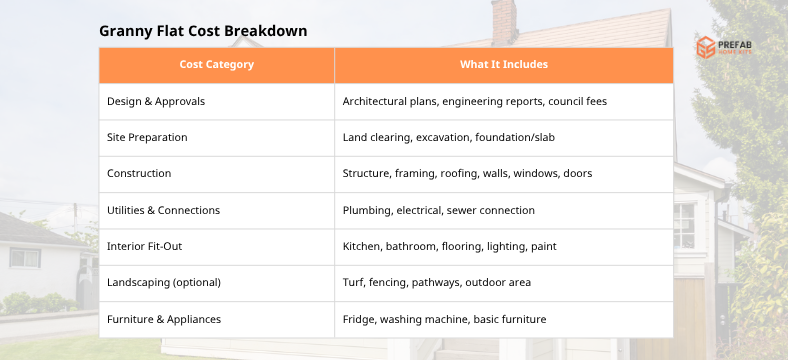
To understand your budget better, it helps to look at how the cost is divided across different stages of the build.
Design and approvals
Before you can start building your granny flat, you need to go through the design and approval stage. This is where your ideas are turned into proper plans that builders and councils can work with.
This stage usually includes architectural drawings, engineering reports, and council application fees. Depending on your location, you may also need to meet specific regulations around size, setbacks, and usage. All of this ensures your granny flat is safe, legal, and suitable for your block.
While this part might feel like just paperwork, it plays a big role in your overall budget. Costs can range from a few thousand dollars to much more if your design is complex or if extra reports are required. Getting this stage right early can also help you avoid delays or costly changes later on.
Site preparation
Site preparation is often underestimated, but it can have a big impact on the total cost of your granny flat. Before construction begins, your land needs to be ready to support the build.
This process can include clearing vegetation, removing existing structures, levelling the ground, and preparing the foundation. If your block is flat and easy to access, this stage is usually straightforward and more affordable.
However, if your land is sloped, rocky, or difficult to reach, costs can increase quickly. You may need excavation work, retaining walls, or specialised equipment. Even things like narrow access paths can add to labour time and cost.
Because site conditions vary so much, this is one area where budgets can change unexpectedly.
Construction
Construction is the largest and most important part of building a granny flat, and it’s where most of your budget will go. This stage covers the actual building of the structure.
It includes framing, roofing, walls, insulation, windows, and doors. The size and layout of your granny flat will have a direct impact on how much this costs. A simple, compact design is more affordable, while larger or more complex layouts require more materials and labour.
The type of build also matters. Prefab granny flats may reduce construction time and cost, while custom builds usually take longer and cost more but offer greater flexibility.
Because construction is such a big part of the project, even small design changes can have a noticeable effect on your final budget.
Utilities and connections
For your granny flat to function as a proper living space, it needs to be connected to essential services like water, electricity, and sewer.
These connections can vary in cost depending on how your property is set up. If your granny flat is built close to the main house, it’s usually easier and cheaper to connect to existing systems.
However, if it’s further away, you may need additional piping, wiring, or even upgrades to your current systems. In some cases, connecting to sewer lines can be one of the more expensive parts of the project.
Planning the location of your granny flat carefully can help reduce these costs and make the setup more efficient.
Interior fit-out
Once the structure is complete, the interior fit-out is what turns your granny flat into a comfortable and livable space. This is where everything comes together.
The fit-out includes installing the kitchen, bathroom, flooring, lighting, paint, and other finishes. This stage allows you to add your personal style, but it’s also where costs can vary a lot.
Basic finishes can keep your budget under control while still creating a clean and modern look. On the other hand, choosing high-end materials, custom cabinetry, or designer fixtures can increase costs quickly.
This is often the stage where homeowners are tempted to upgrade, so it’s important to balance style with budget to avoid overspending.
Hidden Costs to Watch Out For
Many homeowners focus on the main construction cost but forget about additional expenses that can add up.
Landscaping
After building a granny flat, your yard may need to be repaired or updated. This could include grass, fencing, or pathways.
Furniture and appliances
A granny flat isn’t ready to use without basic furniture and appliances. These costs are often not included in the build.
Council and compliance costs
Sometimes there are extra fees or changes required during the approval process. These can increase your overall cost.
Contingency budget
Unexpected issues can arise during construction. Setting aside an extra 10–15% of your budget can help you manage these without stress.
Is Building a Granny Flat Worth the Cost?
For many homeowners, building a granny flat is a worthwhile investment.
It can increase the value of your property and provide flexible living space. You can use it for family, guests, or even as a home office.
Another major advantage is rental income. In many areas, a granny flat can generate steady weekly rent, which can help offset the cost of building it.
Read more: How to Build a Granny Flat on a Budget
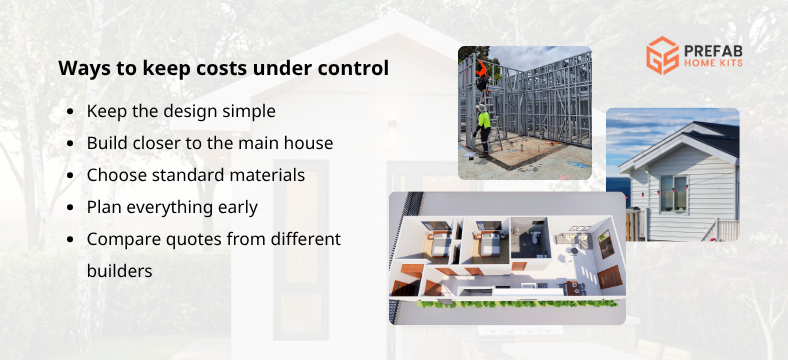
Ways to Keep Costs Under Control
If you want to stay within budget, there are practical ways to manage the cost of your granny flat. These small decisions can make a big difference in your final cost.
Keep the design simple
Choosing a simple layout is one of the easiest ways to control the cost of your granny flat. Basic shapes and open-plan designs require fewer materials and less labour, which helps keep the budget down. Complex layouts with extra walls or unusual structures can quickly increase both time and cost.
Build closer to the main house
Placing your granny flat closer to the main house can reduce the cost of connecting utilities like water, electricity, and sewer. The shorter the distance, the less work is required, which can save a noticeable amount on your overall build.
Choose standard materials
Using standard, widely available materials is a smart way to manage your budget. While premium finishes may look appealing, they can significantly increase costs. Simple materials can still create a clean and modern look without putting pressure on your finances.
Plan everything early
Careful planning before construction begins is key. Changes made during the build are often expensive and can delay the project. By finalising your design, layout, and materials early, you reduce the risk of unexpected costs.
Compare quotes from different builders
Getting multiple quotes allows you to understand the market and find the best value. It’s important not just to look at the price, but also what is included in each quote. This helps you avoid hidden costs and choose a builder that fits your budget and expectations.
Final Thoughts
The cost of building a granny flat in Australia can vary, but most projects fall within a manageable range compared to buying a new property.
Understanding the key cost factors—such as size, design, site conditions, and finishes—helps you plan more accurately and avoid unexpected expenses.
With the right approach, a granny flat can be a cost-effective way to add space, support family living, or generate income. By planning carefully and keeping your budget in mind, you can create a space that delivers long-term value without overspending.
Get a FREE quote for a granny flat here.
Explore more ideas at our Prefab Home Kits Fanpage.