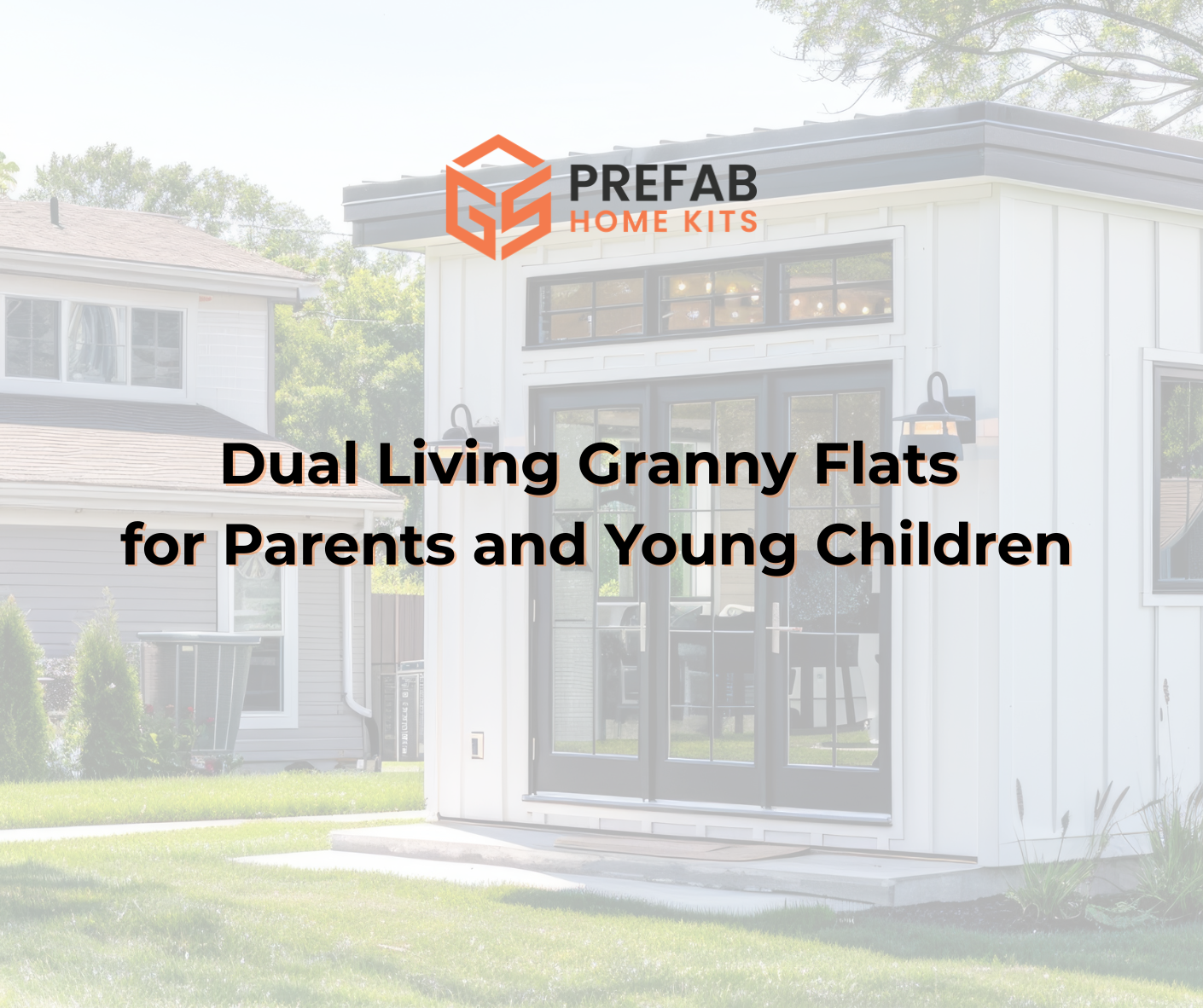
Are Prefabricated Homes Better Than Traditional Builds?

If you’re planning to build a home, you’ve probably come across the growing debate: are prefabricated homes better than traditional builds? With rising construction costs, longer build times, and increasing demand for housing, many homeowners-wanna-be are now considering prefab homes as a modern alternative to conventional construction.
Prefabricated homes are no longer niche or experimental. Today, they are widely used for family homes, investment properties, and even high-end custom residences. Still, deciding whether prefab homes are better than traditional builds depends on what you value most as a homeowner.
This article takes a clear, balanced look at both options to help you decide which approach suits your needs, budget, and lifestyle.
The definition of Prefabricated Homes
Prefabricated homes are houses that are partially or fully built off-site in a factory-controlled environment and then transported to the building site for assembly. Depending on the system, this may involve wall panels, structural components, or fully finished sections.
Once installed on permanent foundations and approved by local authorities, prefab homes are legally and functionally the same as traditionally built houses. The main difference lies in the construction process, not in how the home looks or performs once completed.
What Are Traditional Builds?
Traditional homes are built entirely on-site from the ground up. Materials are delivered to the site, and construction progresses step by step, usually following a linear sequence. This method has been used for decades and is familiar to most homeowners.
While traditional builds offer flexibility during construction, they are also more exposed to weather delays, labour shortages, and on-site inefficiencies.
Build Time: Prefabricated Homes vs Traditional Builds
One of the clearest advantages of prefab homes is speed.
Prefabricated homes are built in a factory while site preparation happens at the same time. This parallel process can significantly reduce overall build time. On-site assembly often takes weeks rather than months.
Traditional builds usually take longer because each stage depends on the previous one being completed on-site. Weather delays, trade availability, and scheduling issues can extend timelines.
For homeowners who want to move in sooner or reduce holding costs, prefabricated homes often have the advantage.

Cost Predictability and Budget Control
Cost is one of the biggest concerns for homeowners, and this is where prefabricated homes often stand out.
Prefab homes typically involve more upfront planning and fixed pricing. Because much of the construction happens in a factory, material and labour costs are locked in earlier, reducing the risk of unexpected variations.
Traditional builds can sometimes appear flexible at the start, but costs may increase as construction progresses due to delays, material price changes, or design adjustments.
While prefab homes are not always cheaper overall, they often provide better cost certainty, which many homeowners find just as valuable.
Quality and Consistency
Quality is often misunderstood when comparing prefab homes and traditional builds.
Prefabricated homes are constructed in controlled environments where materials are protected from weather and workmanship follows repeatable processes. Quality checks are carried out at multiple stages, which can lead to more consistent outcomes.
Traditional builds rely heavily on on-site conditions and individual trades. While many traditional homes are built to a high standard, results can vary depending on supervision, weather, and scheduling.
In many cases, prefabricated homes achieve equal—or even better—build consistency compared to traditional construction.
Design Flexibility and Customisation
A common misconception is that prefab homes are limited in design. In reality, modern prefabricated homes offer a wide range of layouts, finishes, and customisation options.
That said, traditional builds may still offer slightly more flexibility during construction, as changes can sometimes be made later in the process. Prefab homes usually require design decisions to be finalised earlier to suit factory production.
If you value making changes on the fly, a traditional build may feel more flexible. If you prefer clear decisions upfront and fewer surprises later, prefab homes can be a better fit.
Energy Efficiency and Sustainability
Prefabricated homes often perform very well in terms of energy efficiency. Factory construction allows insulation, sealing, and detailing to be installed more accurately, which can improve thermal performance.
Traditional builds can also be energy efficient, but results depend heavily on on-site workmanship and weather conditions during construction.
For homeowners focused on sustainability, prefab homes often offer an advantage through reduced construction waste, efficient material use, and better overall performance.
On-Site Disruption and Stress
Building a home can be stressful, especially when construction takes place over many months.
Prefab homes reduce on-site disruption because much of the work happens off-site. There are fewer trades on the property for extended periods, less noise, and shorter installation times.
Traditional builds require ongoing site access and coordination over a longer period, which can be challenging for homeowners living nearby or managing tight schedules.
Approvals, Financing, and Insurance
Both prefabricated homes and traditional homes must meet the same building codes and planning requirements once installed as permanent dwellings.
When properly approved and certified, prefab homes are generally accepted by councils, lenders, and insurers in the same way as traditional houses.
The key is ensuring the home is permanently fixed, compliant with regulations, and supported by proper documentation.
Are Prefabricated Homes Better Than Traditional Builds?
The answer depends on your priorities.
Prefabricated homes may be better if you:
- Want faster build times
- Prefer cost certainty and fewer surprises
- Value consistent quality
- Want less on-site disruption
Traditional builds may be better if you:
- Want maximum flexibility during construction
- Prefer a familiar building process
- Are comfortable managing longer timelines
Neither option is universally better—but for many modern homeowners, prefab homes align more closely with today’s expectations around efficiency, transparency, and speed.

Conclusion
So, are prefabricated homes better than traditional builds? For many homeowners-wanna-be, the answer is increasingly yes—especially when speed, predictability, and quality matter.
Prefab homes and traditional builds can both deliver excellent results. The real difference lies in how the home is built and how much uncertainty you’re willing to accept along the way. By understanding the strengths and trade-offs of each option, you can choose the building method that best supports your vision of homeownership.
Get a FREE quote for your dream house here.
Explore more ideas at our Prefab Home Kits Fanpage.