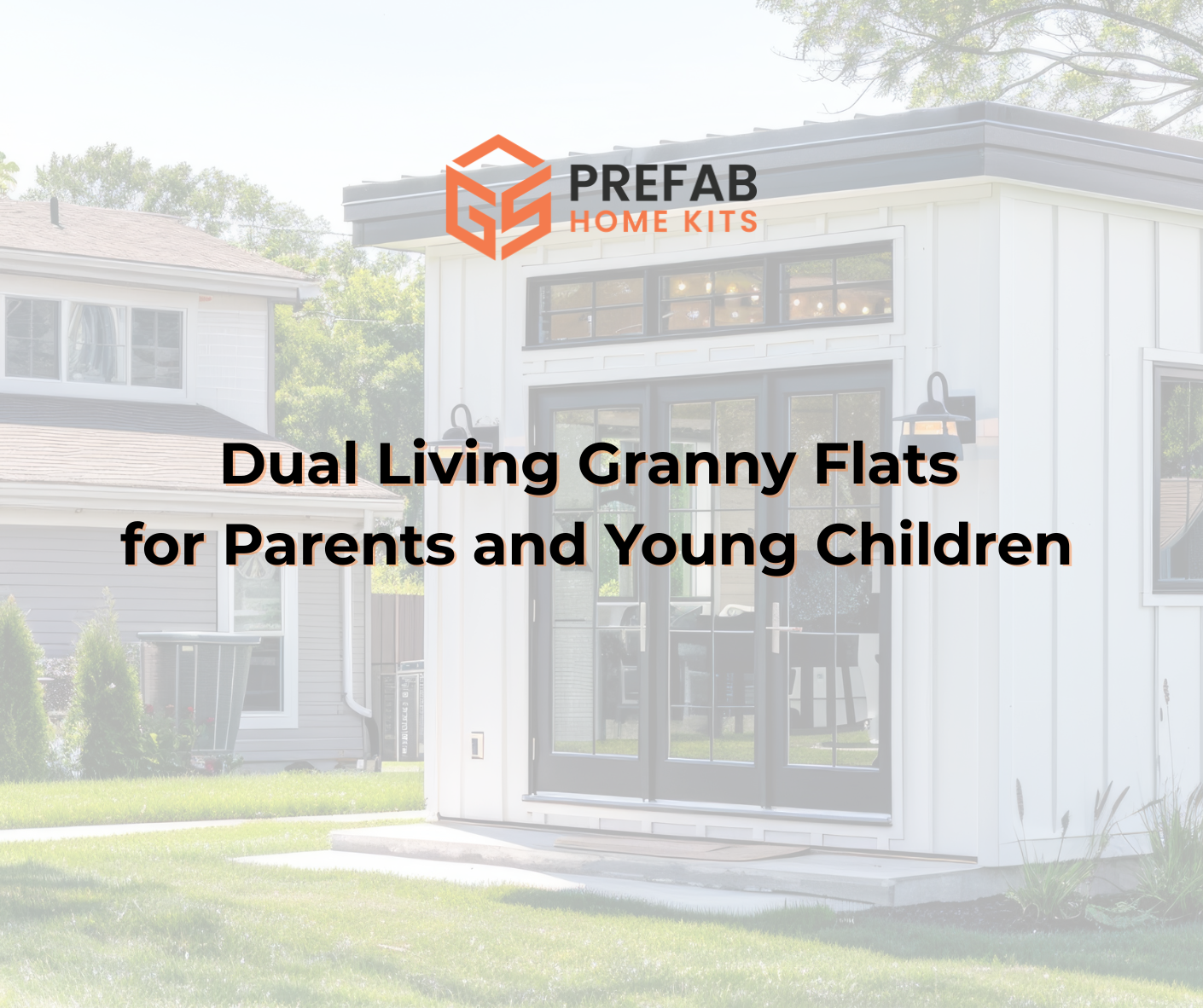
Prefabricated Home in Australia: An Overview

If you’ve ever dreamed of owning a home in Australia—but felt overwhelmed by the cost, the long construction timelines, or the stress of managing a traditional building project—you’re definitely not alone. That’s exactly why prefabricated homes are becoming one of the most popular housing choices across the country.
In today’s Australia, where homeowners want something affordable, fast, stylish, and energy-efficient, a prefabricated home offers the perfect balance of modern design and practical living. Whether you call them prefab houses, prefabricated houses, or simply prefabricated homes Australia, they are reshaping how Aussies think about building a home.
Below is your easy-to-read guide to everything you need to know—how prefab homes work, why they’re booming, how much they cost, and whether they’re right for you.
What Is a Prefabricated Home?
A prefabricated home is a house built off-site in a controlled factory environment, then transported to your land and assembled there.
Instead of doing every step directly on your block—battling weather delays, labour shortages, or unpredictable costs—the main construction happens in a factory. Once complete, the sections (called modules or panels) are delivered and installed, often in just a few days.
This building method also applies to:
- Prefab houses
- Prefabricated houses
- Modular homes
- Kit homes
Different terms, same idea—smarter building with less stress.
Why Are Prefabricated Homes So Popular in Australia?
Australia’s housing market has changed dramatically in the last decade. With rising land prices, labour shortages, and the growing cost of traditional construction, more Australians are turning to prefabricated homes as a more efficient, modern solution.
Here’s why:
1. Faster Construction Time
While a normal home can take 9–18 months, a prefabricated home can take as little as:
- 8–12 weeks in the factory, plus
- 2–4 weeks for installation on site
You get to your home faster—and with far fewer headaches.
2. More Affordable Than Traditional Building
Because the process is efficient and factory-controlled, costs are often 10–30% lower than conventional homes.
Fewer delays.
More predictable budgets.
No endless labour costs.
For first-time homeowners or families trying to control spending, a prefab home is genuinely one of the smartest choices.
3. Designed for Australian Conditions
A modern prefab house isn’t a temporary shack—it’s a high-quality, long-lasting home built for:
- Harsh Australian sun
- Cyclone-prone regions
- Bushfire zones (BAL ratings available)
- High insulation needs (excellent energy performance)
In fact, many prefabricated houses in Australia are more durable than typical site-built homes.
4. Sustainable & Energy-Efficient
Prefab homes naturally produce:
- Less construction waste
- Better material usage
- Lower carbon footprint
- Higher energy efficiency thanks to tight factory-built joints
In an era of rising power bills, this is a huge benefit for homeowners.
5. Customisable to Your Lifestyle
Prefab doesn’t mean “cookie-cutter.”
You can choose:
- Floor plans
- Facades
- Cladding (timber, steel, composite, fibre cement)
- Windows & doors
- Interior finishes
- Energy-efficient upgrades
They’re every bit as flexible as traditional homes—sometimes even more!

Types of Prefabricated Homes in Australia
1. Modular Homes
Built in multiple fully-completed sections and craned into place.
Best for:
Homeowners wanting faster completion and modern designs.
2. Panelised Prefab Houses
Walls, floors, and roof panels are pre-built and assembled on-site.
Best for:
Customisable designs and sloping blocks.
3. Kit Homes
You receive a “flat-pack” home with all components ready to assemble.
Best for:
Owner-builders and rural locations.
4. Prefab Granny Flats
Small, functional homes perfect for backyard rentals, extra family space, or downsizing.
Best for:
Investment or multigenerational living.
How Much Does a Prefabricated Home Cost in Australia?
Prices vary depending on size, materials, and finishes, but here’s a helpful estimate:
Prefab Home Price Guide (Approx.)
| Home Type | Starting Price |
| 1-bedroom prefab home | $90,000 – $140,000 |
| 2-bedroom prefab house | $140,000 – $220,000 |
| 3-bedroom prefabricated home | $220,000 – $350,000 |
| 4-bedroom prefab home | $320,000 – $450,000+ |
Remember:
Prefab homes often include many structural elements upfront, so you avoid unpredictable labour costs.
Reference price list of prefabricated homes calculated by m².
Are Prefabricated Homes Good Quality?
Short answer: Absolutely—often better than traditional builds.
Because the home is built inside a factory, it avoids:
- Rain damage
- Warped timber
- On-site errors
- Messy construction stages
Every part is produced using high-precision machinery and checked under strict quality control. This means your prefabricated home often has:
- Better insulation
- Straighter walls
- Longer-lasting materials
- Higher overall consistency
Prefab doesn’t mean cheap—it means efficient.

Do Prefabricated Homes Last?
Absolutely — prefabricated homes are not only good quality, they often outperform traditional site-built homes in durability, precision, and long-term performance. The old idea that prefab homes are “cheap” or “temporary” is long gone. Today’s prefab houses are engineered using advanced technology, high-grade materials, and strict factory standards that traditional building sites simply can’t match.
Factory-Built Means Controlled, Consistent, and Weather-Proof
When a home is built inside a factory, it’s shielded from everything that usually slows down or damages on-site construction, including:
- Rain, wind, heat waves, and storms
- Moisture exposure that can lead to mould
- Warping timber from sudden temperature changes
- Dust, dirt, and site debris
- Human errors caused by unpredictable site conditions
Instead of dozens of trades working in unpredictable weather, your prefabricated house is created in a clean, dry, climate-controlled environment. This alone improves structural longevity and eliminates many quality issues that happen on open job sites.
High-Precision Machinery Ensures Better Accuracy
A typical on-site build relies heavily on manual labour. But in prefab construction, components are produced using:
- Computer-guided cutting machines
- Automated assembly lines
- Laser-levelled measurement systems
- Robotics designed to taintain millimetre precision
This means your walls, floors, and roof panels are straighter, tighter, and more consistent than most traditional builds. You avoid common issues like uneven frames, misaligned joints, or gaps that cause drafts.
Strict Quality Control at Every Stage
While traditional homes are inspected at only a few milestones, prefabricated homes undergo multiple checks:
- Material quality checks
- Structural inspections
- Engineering approvals
- Fit-and-finish evaluations
- Compliance with Australian Standards
Each module or panel must pass inspection before moving to the next phase—something that rarely happens in typical construction.
Superior Insulation and Energy Performance
Because prefab homes are built indoors and assembled with tight precision, they naturally provide:
- Better thermal sealing
- Reduced air leakage
- More consistent insulation coverage
- Higher energy efficiency ratings
This means:
- Lower electricity bills
- Warmer winters
- Cooler summers
- More comfortable living year-round
Many homeowners notice their prefab houses feel more solid and quieter, thanks to the extra insulation and tighter joins.
Longer-Lasting Materials and Structural Strength
Modern prefab houses often use advanced materials such as:
- Steel framing (termite-proof, fire-resistant, and incredibly durable)
- Cement board or composite cladding
- Engineered timber that doesn’t warp or shrink
- Double-glazed windows
- Colorbond roofing
These aren’t shortcuts—they’re upgrades.
Prefab manufacturers choose these materials because they perform better in a factory environment and offer stronger long-term results for Australian conditions.
Consistent Quality, No On-Site Surprises
On a construction site, quality can vary depending on:
- Which tradesperson is working that day
- Weather conditions
- Delays
- Material storage problems
But a prefab home is assembled like a high-quality product line:
- Same standards
- Same tools
- Same controlled environment
- Same technicians
You get predictability and peace of mind—something traditional builds rarely guarantee.
Who Are Prefabricated Homes Perfect For?
A prefabricated home is ideal if you are:
- A first-time homeowner wanting a more affordable option
- A family needing fast construction
- A retiree looking to downsize
- An investor adding a prefab granny flat
- A rural landowner wanting easy logistics
- Someone who prefers modern, minimal, Scandinavian-style designs
If you value speed, quality, and design flexibility—prefab is made for you.
Prefab Houses vs Traditional Homes: Which Should You Choose?
Choose a Prefabricated Home If You Want:
- Faster build time
- Lower total cost
- Modern, energy-efficient designs
- High-quality materials
- Predictable budgets
- Less stress
Choose Traditional Building If You Want:
- Ultra-custom architectural designs
- Complex multi-level homes
- Large structural modifications over time
But for 80% of homeowners, a prefabricated house offers a better balance of price, performance, and convenience.
Final Thoughts: Why Prefabricated Homes Are the Future of Australian Housing
In a world where Australians want more control, more speed, and more affordability, prefabricated homes provide exactly that.
They’re stylish.
They’re energy efficient.
They’re durable and modern.
And most importantly—they help you step into your dream home sooner.
If you’re ready to explore the possibilities of a prefabricated home Australia, there has never been a better time.
Get a FREE quote for your dream house here.
Explore more ideas at our Prefab Home Kits Fanpage.