Prefabricated Homes for Multi-Generational Living
As family structures evolve across Australia, more households are choosing to live together across multiple generations. Whether it’s adult children staying longer, elderly parents moving in, or families wanting closer connections, housing needs are changing. A prefabricated home offers a flexible and practical solution for this lifestyle, combining modern design with cost efficiency and faster build times.
Multi-generational living is no longer just a cultural preference, it’s becoming a smart financial and lifestyle choice. With rising property prices and the cost of care increasing, many families are looking for ways to share space while still maintaining independence. This is where a well-designed prefabricated home can make a real difference.
Why Multi-Generational Living Is Growing in Australia
In recent years, Australia has seen a steady increase in multi-generational households. One of the main drivers is affordability. Buying or renting separate homes is becoming more expensive, especially in major cities. Living together allows families to share costs such as mortgages, utilities, and daily expenses.
Another factor is ageing population trends. Many families prefer to care for elderly parents at home rather than rely on external care facilities. A thoughtfully planned prefabricated home makes it easier to accommodate ageing family members comfortably and safely.
There is also a lifestyle element. Living close to family can provide emotional support, shared responsibilities, and stronger relationships. However, it requires a home design that balances togetherness with privacy, something prefab solutions are well-equipped to deliver.
How Prefabricated Homes Supports Multi-Generational Living
Prefabricated homes are built off-site in sections and then assembled on your land, which allows for more controlled construction and flexible layouts. This makes it particularly suitable for multi-generational households, where different family members may have different needs.
Design flexibility is one of the biggest advantages. You can create separate living zones within the same home, such as self-contained suites, dual living areas, or detached units like granny flats. This allows each generation to maintain a sense of independence while still being close.
In addition, the faster construction timeline of a prefabricated home means families can adapt their living situation more quickly. Whether you’re planning for a growing family or accommodating elderly parents, prefab homes can be delivered and installed in a relatively short timeframe compared to traditional builds.
Smart Layout Ideas for Multi-Generational Prefabricated Homes
Design plays a critical role in making multi-generational living work. A well-planned prefabricated home can include features that support both privacy and shared living. For example, separate entrances for different family members can help create independence, while shared spaces like kitchens and living rooms encourage connection.
Dual occupancy layouts are also popular. These designs divide the home into two distinct living areas, often with separate bedrooms, bathrooms, and even kitchen facilities. This setup works well for families who want to live together but maintain clear boundaries.
Another option is adding a secondary dwelling, such as a granny flat, on the same property. Many prefabricated homes are designed to accommodate this, offering a compact yet fully functional space for extended family members.
Accessibility is another important consideration, especially for older residents. Features like wider doorways, step-free access, and single-level layouts can make a significant difference in comfort and safety.
Check out some common layouts for prefabricated home here.
Cost Benefits of a Prefabricated Home for Extended Families
One of the main reasons families choose a prefabricated home for multi-generational living is cost efficiency. Building one larger home or adding a secondary dwelling is often more affordable than purchasing multiple separate properties.
Prefab construction also helps control costs. Because the majority of the build happens in a factory, there is less material waste and fewer delays. This results in more predictable pricing and fewer unexpected expenses.
Sharing a prefabricated home can also reduce ongoing living costs. Expenses such as utilities, maintenance, and groceries can be shared among family members, making day-to-day living more affordable.
For families thinking long-term, this approach can also add value to the property. Homes designed for multi-generational living are increasingly in demand, which can make them a strong investment.
Read more: Prefabricated Home Cost: What You Should Budget For
Privacy and Independence: Finding the Right Balance
One of the biggest challenges in multi-generational living is maintaining privacy. A well-designed prefabricated home addresses this by creating clear boundaries between shared and private spaces.
Separate bedrooms and bathrooms for each generation are essential, but thoughtful design goes beyond that. Features like sound insulation, private outdoor areas, and independent living zones can help ensure everyone feels comfortable in their own space.
At the same time, shared areas should be inviting and functional. Kitchens, dining areas, and living rooms act as central gathering points where families can spend time together. A good balance between these spaces is key to a harmonious living environment.
Is a Prefabricated Home the Right Choice for Your Family?
Choosing a prefabricated home for multi-generational living depends on your family’s needs, budget, and long-term plans. If you are looking for a flexible, cost-effective, and relatively quick housing solution, prefab homes are worth serious consideration.
They are particularly suitable for families who value both connection and independence. With the right design, prefabricated homes can adapt to changing family dynamics over time, whether that means accommodating young children, adult family members, or ageing parents.
It’s also important to consider local council regulations in Australia, especially when adding secondary dwellings or granny flats. Working with experienced prefab builders can help ensure your project meets all requirements.
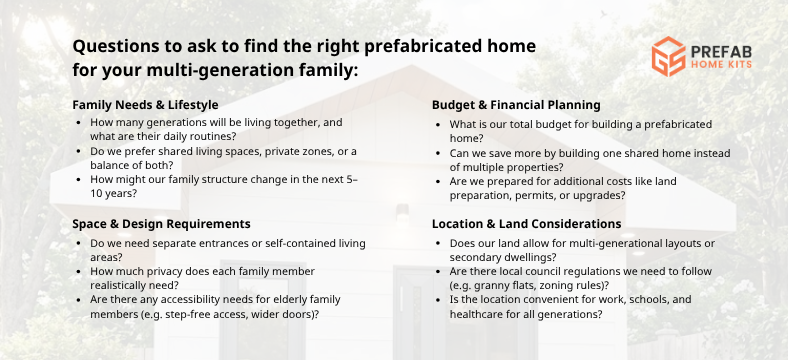
Here are thoughtful, practical questions families can ask themselves before deciding on a prefabricated home for multi-generational living:
Family Needs & Lifestyle
- How many generations will be living together, and what are their daily routines?
- Do we prefer shared living spaces, private zones, or a balance of both?
- How might our family structure change in the next 5–10 years?
Space & Design Requirements
- Do we need separate entrances or self-contained living areas?
- How much privacy does each family member realistically need?
- Are there any accessibility needs for elderly family members (e.g. step-free access, wider doors)?
Budget & Financial Planning
- What is our total budget for building a prefabricated home?
- Can we save more by building one shared home instead of multiple properties?
- Are we prepared for additional costs like land preparation, permits, or upgrades?
Location & Land Considerations
- Does our land allow for multi-generational layouts or secondary dwellings?
- Are there local council regulations we need to follow (e.g. granny flats, zoning rules)?
- Is the location convenient for work, schools, and healthcare for all generations?
Privacy & Boundaries
- How will we manage noise, shared responsibilities, and personal space?
- Do we need separate kitchens or living areas to avoid conflicts?
- How will we maintain independence while living under one roof?
Long-Term Flexibility
- Can the home adapt if one generation moves out or new members join?
- Will the design still work as family members age?
- Could parts of the home be rented out in the future if needed?
Build Process & Timeline
- How quickly do we need the home to be completed?
- Are we comfortable with the prefab building process and level of customisation available?
- Have we chosen a reliable builder experienced in prefabricated home projects?
These questions help families think beyond just cost and layout, and focus on long-term comfort, relationships, and practicality.
Final Thoughts
A prefabricated home offers a modern and practical approach to multi-generational living in Australia. With flexible layouts, controlled construction, and cost-saving benefits, it provides a solution that meets both current and future family needs.
As more families look for ways to stay connected while managing rising living costs, prefab homes are becoming an increasingly popular choice. By combining smart design with efficient construction, prefabricated homes can create a comfortable, functional, and future-ready space for every generation.
Get a FREE quote for your dream house here.
Explore more ideas at our Prefab Home Kits Fanpage.