
10 Common Mistakes That Get Granny Flat Approval Rejected
If you’re planning to build a granny flat, getting granny flat approval is one of the most important steps in the process. Without it, you can’t legally build, rent, or even use the space the way you intend.
The tricky part is that many homeowners assume approval is just a formality. In reality, a lot of applications get delayed or rejected because of avoidable mistakes. These issues are often small, but they can cost you time, money, and a lot of frustration.
The good news is that once you understand what commonly goes wrong, it becomes much easier to avoid these problems. This guide walks you through the key mistakes that can lead to rejected granny flat approval and how to stay on the right track.
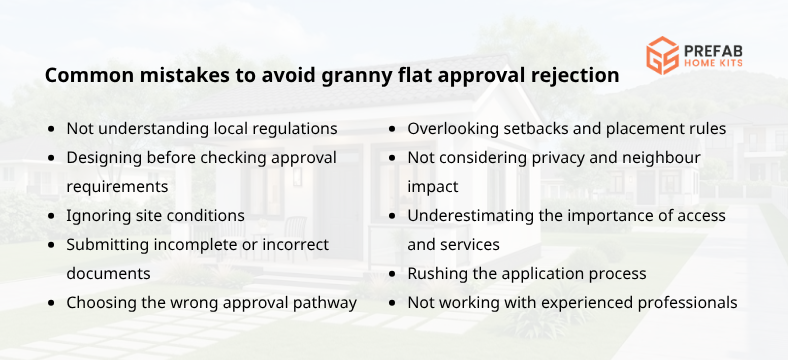
Not Understanding Local Regulations
One of the most common reasons for rejected granny flat approval is simply not understanding the rules that apply to your property.
Each council has its own regulations, covering things like minimum land size, maximum building size, setbacks, and placement. If your design does not meet these requirements, your application may not even get past the initial review stage.
Many homeowners make the mistake of relying on general information instead of checking their local rules. What works in one area may not be allowed in another.
Taking the time to understand your specific council requirements early on can prevent major issues later.
Designing Before Checking Approval Requirements
It’s natural to get excited and start designing your granny flat straight away. However, this can lead to problems if the design doesn’t meet approval standards.
A common mistake is creating a layout first and then trying to adjust it to fit regulations later. This often leads to redesigns, delays, and additional costs.
For smooth granny flat approval, your design should be based on what is allowed from the beginning. Starting with the rules ensures that your plans are realistic and more likely to be approved.
Ignoring Site Conditions
Even if your design meets all the general rules, your land still needs to support the build. Ignoring site conditions is a mistake that can affect your approval.
Factors like slope, soil type, drainage, and access all play a role in whether your granny flat can be built safely and efficiently.
If your site has challenges, you may need additional reports or design adjustments. Failing to address these issues early can lead to delays or rejection during the approval process.
Understanding your land is just as important as understanding the regulations.
Submitting Incomplete or Incorrect Documents
Paperwork might not be the most exciting part of the process, but it’s critical for granny flat approval.
Incomplete or incorrect documents are one of the most common reasons applications are delayed or rejected. Missing details, unclear drawings, or incorrect measurements can all slow things down.
Approval authorities rely on your documents to assess your project. If something is unclear or missing, they may request revisions or reject the application altogether.
Making sure your documents are complete, accurate, and professionally prepared can significantly improve your chances of approval.
Choosing the Wrong Approval Pathway
In Australia, there are usually two main pathways for granny flat approval: complying development and a Development Application (DA).
Some homeowners try to go through the faster complying development route, even when their design does not meet the required standards. This can lead to rejection and wasted time.
Choosing the right approval pathway is important. If your granny flat meets all standard requirements, complying development can be quick and efficient. If not, a DA may be the better option, even though it takes longer.
Understanding which pathway suits your project can save you from unnecessary delays.
Overlooking Setbacks and Placement Rules
Setbacks and placement rules are a key part of granny flat approval, but they are often overlooked.
Your granny flat must be positioned a certain distance from boundaries, fences, and other structures. These rules help maintain privacy, safety, and proper spacing between buildings.
Even a small mistake in placement can result in your application being rejected or sent back for revision.
Carefully planning the position of your granny flat on your block is essential for meeting approval requirements.

Not Considering Privacy and Neighbour Impact
Councils don’t just look at your property, they also consider how your granny flat will affect your neighbours.
If your design overlooks nearby homes, blocks sunlight, or creates privacy issues, it may raise concerns during the approval process.
For smooth granny flat approval, your design should take these factors into account. Simple adjustments like window placement, screening, or orientation can make a big difference.
Thinking about the surrounding environment helps create a design that is more likely to be approved.
Underestimating the Importance of Access and Services
A granny flat must have proper access and connections to essential services like water, electricity, and sewer.
Some homeowners focus only on the structure itself and forget about how these services will be connected. This can lead to problems during the approval stage.
If access is limited or service connections are unclear, your application may be delayed or require additional work.
Planning these details early ensures your project meets all necessary requirements.
Rushing the Application Process
Trying to rush granny flat approval is another common mistake. When you hurry, it’s easy to miss important details or submit incomplete information.
This often leads to requests for changes, which can slow the process down even more than if you had taken your time in the first place.
A careful and well-prepared application is more likely to be approved quickly than a rushed one.
Not Working with Experienced Professionals
While it’s possible to manage the process yourself, working with experienced designers, builders, or consultants can make things much easier.
Professionals who are familiar with granny flat approval understand the requirements and know how to prepare plans that meet them.
Without this experience, it’s easier to make mistakes that lead to delays or rejection.
Getting the right support can save you time and reduce stress throughout the process.
Final Thoughts
Getting granny flat approval is not just about submitting an application, it’s about making sure every part of your project meets the required standards.
Most rejections happen because of simple, avoidable mistakes. Not understanding regulations, ignoring site conditions, or submitting incomplete documents can all slow things down or stop your project altogether.
The key is to plan carefully, understand the rules, and take the process seriously from the beginning. By avoiding these common mistakes, you can improve your chances of approval and move forward with confidence.
A well-prepared granny flat project doesn’t just get approved faster, it also sets the foundation for a smoother build and better long-term results.
Get a FREE quote for a granny flat here.
Explore more ideas at our Prefab Home Kits Fanpage.