Are Prefabricated Homes Worth It in 2026? A Practical Guide
If you’re thinking about building a new home this year, you’ve probably come across the idea of a prefabricated home. With rising construction costs, labour shortages, and changing lifestyle needs, many homeowners-wanna-be are asking the same question: Are prefabricated homes still worth it in 2026?
The short answer is yes, for many people, they are. But like any building option, it depends on your priorities, budget, and expectations.
This guide breaks it down in a simple, honest way so you can decide if a prefabricated home is the right choice for you in today’s market.
Why Prefabricated Homes Are Gaining Momentum in 2026
In 2026, the housing landscape continues to evolve. Traditional construction is still widely used, but it often comes with longer timelines, higher labour costs, and more uncertainty.
A prefabricated home offers a different approach. By manufacturing major components in a factory and assembling them on-site, prefab construction can reduce delays and improve efficiency. For many homeowners, prefab homes align well with these changing priorities.
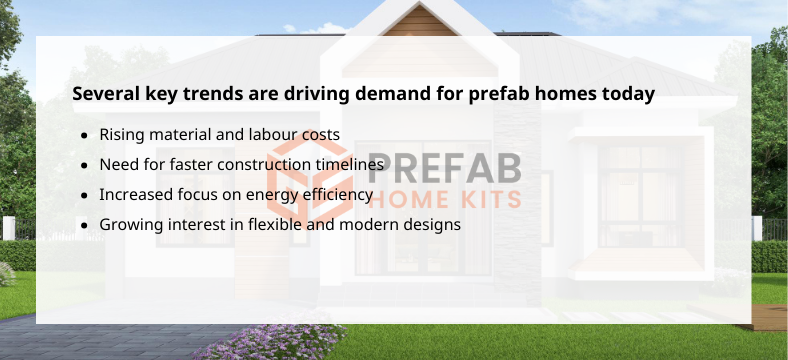
Several key trends are driving demand for prefab homes today:
- Rising material and labour costs
- Need for faster construction timelines
- Increased focus on energy efficiency
- Growing interest in flexible and modern designs
Cost vs Value: Are You Really Saving Money?
One of the main reasons people consider a prefabricated home is cost. In many cases, prefab construction offers better cost predictability because a large portion of the work is completed in a controlled factory environment. This helps reduce unexpected labour and material fluctuations during the build.
However, it’s important to understand that the base price is not the full picture. Additional costs such as land preparation, foundations, transport, and council approvals still need to be included in the total budget. Despite this, in 2026, prefabricated homes can still represent strong overall value. Shorter construction timelines can reduce holding costs such as rent or loan interest, factory efficiency can minimise material waste, and energy-efficient designs can lower long-term running expenses.
So while you may not always pay less upfront, you often gain better overall value and fewer financial surprises.
Speed Matters More Than Ever
Time has become an increasingly important factor in housing decisions. Many homeowners are managing rent, mortgage commitments, or strict moving timelines, which makes construction speed a key consideration.
A prefabricated home offers a faster path to completion because factory construction and site preparation can happen at the same time. This parallel process reduces delays and improves scheduling efficiency.
In addition, factory production is less affected by weather conditions, and on-site assembly is typically quicker than building a home from scratch. In 2026, this time-saving advantage is one of the main reasons many homeowners are choosing prefab over traditional construction methods.
Design Flexibility in Modern Prefabricated Homes
There is still a common misconception that prefabricated homes are limited in design or follow standard, repetitive layouts. While this may have been true in the past, modern prefab homes offer far greater flexibility.
Homeowners can now customise floor plans, choose from a wide range of materials and finishes, and select architectural styles that suit their preferences. Whether it’s a single-storey layout or a multi-storey design, prefab homes can be adapted to different lifestyles and property types.
Although decisions need to be made earlier in the process, the level of design flexibility available today is much higher than many people expect.
Energy Efficiency and Sustainability
Energy efficiency is no longer just a bonus feature. It has become a priority for many homeowners. In 2026, rising energy costs and environmental awareness are driving demand for more efficient housing solutions.
Prefabricated homes often perform well in this area due to the precision of factory construction. Insulation can be installed more accurately, airtightness can be better controlled, and overall building performance can be more consistent.
Prefab homes are often designed to integrate features such as solar panels and passive design strategies. Over time, these benefits can result in lower energy bills and a more comfortable indoor environment.
What Are the Downsides in 2026?
While prefabricated homes offer many advantages, there are still some challenges to consider. Understanding these factors helps set realistic expectations before starting your project:
- Upfront planning is critical
Most decisions must be finalised before manufacturing begins, which can feel restrictive for some homeowners.
- Transport and site access matter
Delivering large prefab components requires suitable access, which may not work for all sites.
- Additional costs still apply
Site preparation, utility connections, and approvals can add to the total budget.
- Not all builders offer the same flexibility
Choosing an experienced and reputable prefab provider is essential.
Who Benefits Most from a Prefabricated Home in 2026?
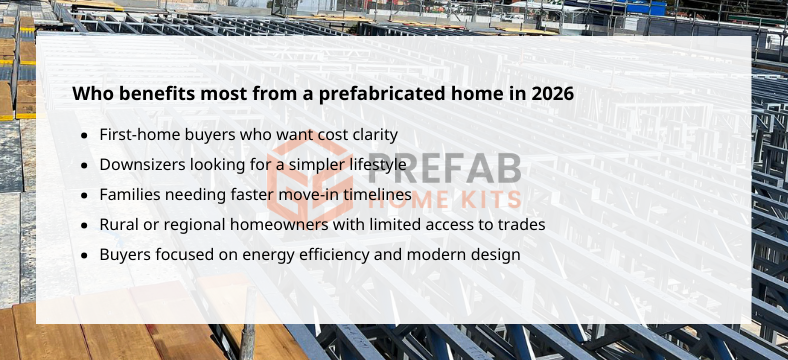
A prefabricated home is particularly well suited to a range of homeowners with different needs and priorities. First-home buyers may benefit from clearer cost structures and more predictable budgeting. Downsizers often appreciate the simplicity and efficiency of prefab living. Families who need to move in quickly can take advantage of shorter construction timelines, while rural or regional homeowners may find prefab construction more practical due to reduced reliance on local trades. In addition, buyers who prioritise energy efficiency and modern design will often find that prefabricated homes align well with their goals. For these groups, prefab construction can offer a strong and practical housing solution in 2026.
Is a Prefabricated Home a Good Long-Term Investment?
In 2026, prefabricated homes are widely accepted as permanent, high-quality residential properties. When built to proper standards, they can offer durability comparable to traditional homes.
Resale value depends more on factors like location, design quality, and maintenance rather than construction method alone.
As prefab housing becomes more common, market acceptance continues to grow.
Final Verdict: Are Prefabricated Homes Worth It in 2026?
So, are prefabricated homes worth it in 2026?
For many homeowners, the answer is yes. A prefabricated home offers a combination of faster construction, more predictable costs, modern design, and strong energy performance.
While it does require careful upfront planning and consideration of site conditions, the overall benefits often outweigh the limitations.
If you’re looking for a smarter, more efficient way to build in today’s market, a prefabricated home is definitely worth considering.
Get a FREE quote for your dream house here.
Explore more ideas at our Prefab Home Kits Fanpage.