Is a Prefabricated Home Cheaper Than Building Traditionally?
If you’re planning to build your own home, one of the first questions that comes up is cost. With so many options available today, many homeowners-wanna-be are asking: Is a prefabricated home actually cheaper than building a traditional house?
The answer isn’t a simple yes or no. In many cases, a prefabricated home can be more cost-effective—but it depends on how you plan, what you include, and where you build.
Let’s break it down in a clear and practical way so you can understand what you’re really paying for.
What Is a Prefabricated Home?
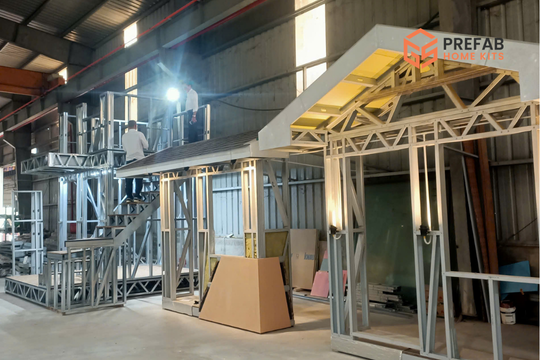
A prefabricated home is a house where major components are built in a factory and then delivered to your land for assembly. These components can include wall panels, roof sections, or even entire modules.
Unlike traditional homes that are built entirely on-site, prefab homes shift much of the construction process indoors. This can improve efficiency and reduce delays.
How Costs Compare: Prefab vs Traditional Builds
At first glance, a prefabricated home often appears more affordable than a traditional build. Many prefab companies advertise a base price that looks significantly lower than the estimated cost of constructing a house on-site. This can make prefab homes seem like the obvious budget-friendly choice. However, it’s important to understand that this base price usually only covers the factory-built structure and does not include the full scope of the project.
Both prefabricated and traditional homes share several essential costs that homeowners must account for. These include purchasing land, preparing the site, building foundations, obtaining council approvals, and connecting utilities such as water and electricity. These elements are required regardless of the construction method and can make up a substantial portion of the total budget.
The real difference between the two approaches is not just the starting price, but how predictable and controlled the overall costs are. Prefabricated homes tend to offer more structured pricing due to factory production, while traditional builds may involve more variability depending on site conditions, labour availability, and weather delays. For homeowners, this difference in cost control can be just as important as the total amount spent.
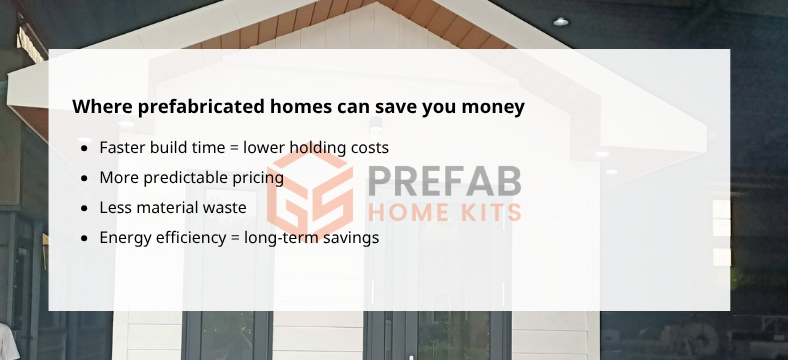
Where Prefabricated Homes Can Save You Money
Faster Build Time = Lower Holding Costs
One of the most noticeable financial advantages of a prefabricated home is the speed of construction. Because the home is built in a factory while the site is being prepared, multiple stages of the project can happen at the same time. This parallel process can significantly reduce the total construction timeline compared to traditional building methods.
A shorter build time can translate into real financial savings. Homeowners may spend less on rent while waiting for their new home to be completed, and construction loan interest can also be reduced. Over the course of the project, these savings can add up and make a meaningful difference to the overall cost.
More Predictable Pricing
Another key benefit of a prefabricated home is cost predictability. Factory-controlled construction allows builders to measure materials precisely and follow consistent processes, which leads to more accurate pricing from the beginning.
This reduces the likelihood of unexpected cost increases that can sometimes occur in traditional builds due to delays, material shortages, or changes during construction. For homeowners, having a clearer understanding of costs upfront can make budgeting easier and reduce financial stress throughout the project.
Less Material Waste
Prefabricated homes are typically built with greater efficiency in material usage. In a factory setting, materials are cut and assembled with precision, which minimises waste compared to on-site construction where offcuts and inefficiencies are more common.
This efficient use of materials can help lower overall costs and also supports more sustainable building practices. While the savings from reduced waste may not always be immediately obvious, they contribute to the overall value of prefab construction.
Energy Efficiency = Long-Term Savings
Many prefabricated homes are designed with energy performance in mind, which can lead to savings over time. Because components are manufactured in a controlled environment, insulation and sealing can be installed more accurately, resulting in better thermal performance.
This means the home can maintain comfortable indoor temperatures more easily, reducing reliance on heating and cooling systems. Although energy-efficient features may not always reduce the upfront cost, they can lower utility bills in the long run and improve overall living comfort.
Read more: Energy Efficiency of Prefabricated Homes: How It Work
Where Prefabricated Homes May Cost More
Transport and Delivery Costs
A unique cost factor of a prefabricated home is transportation. Since the home is built in a factory, the completed sections must be delivered to the site. This can add to the budget, particularly if the distance is long or if special transport arrangements are required.
In addition, properties with limited access—such as narrow roads, steep driveways, or remote locations—may increase delivery complexity and cost. Planning for these logistics early is essential to avoid unexpected expenses.
Site Preparation Still Matters
Even though much of the construction happens off-site, the land still needs to be properly prepared. Site conditions can have a significant impact on the overall cost, regardless of whether the home is prefabricated or traditionally built.
Blocks with slopes, unstable soil, or limited access may require additional work such as excavation, soil stabilisation, or specialised foundations. These costs can vary widely and are often not included in the prefab home’s base price.
Upfront Planning and Design Costs
Prefabricated homes rely heavily on detailed planning before construction begins. This means that design, engineering, and documentation must be completed early in the process.
While this approach helps streamline construction later, it may involve upfront costs for design services and engineering assessments. For some homeowners, this can feel like a larger initial investment compared to traditional builds where decisions are spread out over time.
Customisation Can Increase Costs
Although prefabricated homes offer design flexibility, customisation can increase the total price. Choosing premium materials, altering layouts, or adding extra features can all add to the base cost.
This is similar to traditional construction, but it’s important to be aware of how quickly upgrades can impact the budget. Clear planning and prioritisation can help keep costs under control.
Is a Prefabricated Home Always Cheaper?
A prefabricated home is not always the cheapest option in terms of upfront cost, but it often delivers better overall value. The combination of faster construction, improved cost predictability, and potential long-term savings can make prefab homes financially attractive.
Rather than focusing only on the initial price, homeowners should consider the total cost of the project, including time savings and ongoing expenses. In many cases, prefab construction offers a more balanced and efficient investment.
When a Prefabricated Home Is the Better Option
A prefabricated home is often a strong choice for homeowners who want a faster and more organised building process. It suits those who value clear budgeting, efficient timelines, and modern design. Homes built on sites with good access and straightforward conditions tend to benefit the most from prefab construction.
It is also a good option for buyers who prioritise energy efficiency and want a home designed with long-term performance in mind.
When Traditional Building May Be Better
Traditional construction may be more suitable for homeowners who prefer flexibility during the building process. If you want to make design changes along the way or have a highly customised vision that evolves over time, a traditional build may feel more comfortable.
It can also be a better fit for sites with difficult access or complex conditions where transporting prefab components may be challenging.
Final Thoughts
So, is a prefabricated home cheaper than building traditionally?
In many cases, yes—but more importantly, it can be more predictable and efficient. While the base price might look lower, the real advantage comes from reduced delays, better cost control, and long-term savings.
For homeowners-wanna-be, the best approach is to compare the total project cost, not just the starting price. With proper planning, a prefabricated home can be a practical and cost-effective way to build your dream home.
Get a FREE quote for your dream house here.
Explore more ideas at our Prefab Home Kits Fanpage.