Prefabricated Home vs Modular Home Cost Comparison
If you’re exploring modern housing options in Australia, you’ve probably come across the term prefabricated home. It’s often mentioned alongside modular homes, and while they sound similar, there are key differences, especially when it comes to cost.
In this guide, we’ll break down how a prefabricated home compares to a modular home in terms of pricing, so you can make a smarter, more informed decision.
What Is a Prefabricated Home?
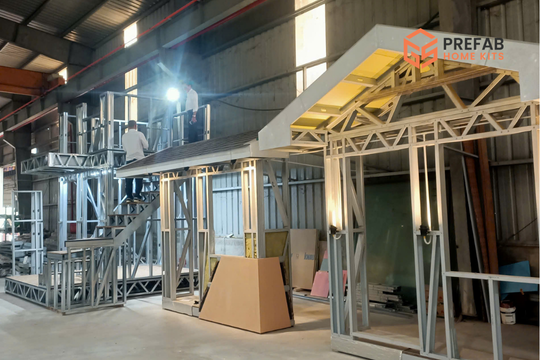
A prefabricated home (or prefab home) is a house where components are built off-site in a factory, then transported and assembled on your land. This category includes several types, such as panelised homes, kit homes, and modular homes.
Because construction happens in a controlled environment, prefab homes often reduce delays, material waste, and labour costs.
Read more: Prefabricated Home Cost: What You Should Budget For
What Is a Modular Home?
A modular home is actually a type of prefabricated home, but with a specific construction method. It is built in large sections (modules) in a factory, then delivered and assembled on-site like building blocks.
These modules are usually close to fully finished when they arrive, including internal fittings like wiring, plumbing, and sometimes even cabinetry.
Key Cost Differences Between Prefabricated Homes and Modular Homes
1. Base Construction Cost
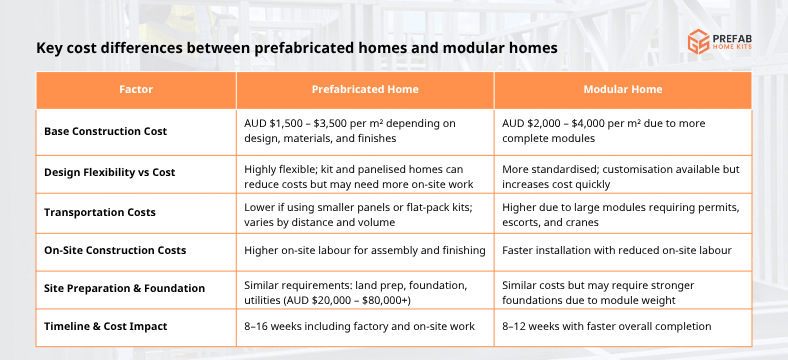
When comparing base construction costs, a prefabricated home generally ranges from AUD $1,500 to $3,500 per square metre, depending on the design complexity, materials used, and level of finishes. In contrast, a modular home typically sits at a higher price point, around AUD $2,000 to $4,000 per square metre, as these homes are built in larger, more complete sections before being transported to site. The cost difference mainly comes from the more advanced engineering requirements and the logistics involved in transporting fully assembled modules.
2. Design Flexibility vs Cost
A prefabricated home usually offers greater flexibility in design, especially with options like kit homes or panelised systems. These can be more cost-effective but may involve additional on-site work. Modular homes, on the other hand, tend to follow more standardised designs. While customisation is still possible, it often leads to a noticeable increase in cost. For buyers working within a tighter budget, choosing a simpler prefabricated home design can be a more economical approach.
3. Transportation Costs
Transportation costs vary significantly between the two. For a prefabricated home, costs depend on the size and number of components being delivered, with smaller panels or flat-pack kits being relatively affordable to transport. Modular homes require moving large, pre-built sections, which often involves special permits, escort vehicles, and crane services. This can substantially increase costs, particularly in regional or hard-to-access areas across Australia.
4. On-Site Construction Costs
A prefabricated home may involve more on-site labour for assembly and finishing, which can add to the overall cost. In comparison, modular homes are designed for quick installation once delivered, reducing on-site labour requirements and shortening the build time. While this can lead to savings in labour, it’s worth noting that modular homes often save more time than they do money overall.
5. Site Preparation and Foundation
Both prefabricated and modular homes require similar site preparation, including land clearing, foundation work, and utility connections. These costs typically range from AUD $20,000 to $80,000 or more, depending on the site conditions and location. However, modular homes may require stronger and more reinforced foundations due to the weight of the pre-assembled modules.
6. Timeline and Its Impact on Cost
The construction timeline can also influence overall costs. A prefabricated home usually takes between 8 to 16 weeks, combining factory production and on-site assembly. Modular homes are often completed faster, typically within 8 to 12 weeks. A shorter timeline can reduce indirect costs such as temporary accommodation, rent, or loan interest, making modular homes financially appealing in certain situations.
Hidden Costs to Watch Out For
Beyond the base price, both prefabricated and modular homes come with additional costs that buyers should plan for. These include council permits and approvals, compliance with bushfire or flood regulations (which are particularly relevant in Australia), delivery distance from the factory, crane hire for installation, and optional interior upgrades or finishes. Altogether, these extra expenses can add approximately 10–25% to the total project cost.
Which Is More Affordable?
A prefabricated home is generally more suitable if your priority is a lower upfront cost, greater flexibility in design, and the ability to manage some aspects of on-site construction. On the other hand, a modular home may be the better choice if you value speed, convenience, and a more complete home delivered in a shorter timeframe, especially in areas where labour costs are higher.
1. Upfront Budget Considerations
A prefabricated home is typically the more affordable option when focusing on upfront costs. With a wider range of build methods—such as kit homes or panelised systems—you can better control expenses by choosing simpler designs and finishes. This makes prefab homes a practical choice for buyers working within a defined budget.
2. Flexibility to Control Costs
One of the key advantages of a prefabricated home is the flexibility it offers. You can adjust materials, layouts, and the level of on-site work to suit your financial situation. This level of control allows homeowners to prioritise spending where it matters most while keeping overall costs manageable.
3. Speed and Convenience Value
Modular homes tend to be more expensive upfront, but they offer significant value in terms of speed and convenience. Because most of the construction is completed in a factory, the on-site installation process is much faster. This can be particularly beneficial if you want to move in quickly or avoid long construction timelines.
4. Labour Cost Efficiency
In areas where labour costs are high—such as many parts of Australia—a modular home can help reduce overall expenses related to on-site construction. The reduced need for trades on-site may offset some of the higher initial costs associated with modular building.
5. Predictability of Final Costs
Modular homes often provide more predictable pricing because a large portion of the work is completed in a controlled factory environment. This reduces the risk of unexpected costs caused by weather delays, material shortages, or on-site complications. In contrast, a prefabricated home with more on-site work may have slightly higher variability in final costs.
6. Long-Term Financial Perspective
From a long-term perspective, both options can offer good value, but the best choice depends on your priorities. If your goal is to minimise initial spending and maintain flexibility, a prefabricated home is often the better fit. If you prefer a faster, more streamlined process with fewer uncertainties, a modular home may justify its higher upfront cost.
7. Overall Value Comparison
Ultimately, a prefabricated home is generally more cost-effective for buyers who are budget-conscious and comfortable with a more hands-on approach. Meanwhile, modular homes are better suited for those who are willing to pay a premium for efficiency, reduced build time, and a more turnkey experience.
Final Thoughts
When comparing costs, a prefabricated home is generally the more budget-friendly option upfront. However, modular homes can offer better time efficiency and predictability, which may balance out the higher initial price.
Ultimately, the best choice depends on your priorities whether that’s saving money, reducing build time, or simplifying the construction process.
If you’re planning to build in Australia, it’s worth getting quotes from multiple prefab builders and carefully reviewing what’s included. A well-planned prefabricated home can deliver excellent value without compromising on quality or comfort.
Get a FREE quote for your dream house here.
Explore more ideas at our Prefab Home Kits Fanpage.