
Granny Flat ROI: How Long Does It Take to Pay Off?
If you’re thinking about building a granny flat as an investment, one question comes up very quickly: how long will it take to pay off? Understanding granny flat ROI is key to making a smart decision, especially if your goal is to generate rental income or improve your financial position over time.
The good news is that a granny flat can offer a relatively strong return compared to other property options. However, the timeline for payback depends on several factors, including your build cost, rental income, and ongoing expenses.
This guide breaks it down in a simple way so you can get a realistic idea of what to expect.
What Does Granny Flat ROI Mean?
Granny flat ROI (return on investment) refers to how much income your granny flat generates compared to how much it costs to build and maintain.
In simple terms, it answers the question: how long will it take for your rental income to cover your initial investment?
For example, if you spend $150,000 building a granny flat and earn $300 per week in rent, your annual rental income would be around $15,600. Based on that, it would take several years to recover your initial cost.
Of course, this is a basic example. Real ROI calculations also consider expenses, vacancies, and long-term value.
Average Cost of Building a Granny Flat
To understand granny flat ROI, you first need to look at the cost side of the equation.
In Australia, building a granny flat typically costs between $100,000 and $200,000 or more. The final cost depends on factors such as size, design, materials, and site conditions.
A simple, standard design will usually sit at the lower end of the range, while custom builds or more complex sites can increase costs significantly.
It’s important to include not just construction costs, but also approvals, site preparation, and utility connections when calculating your total investment.
Rental Income Potential
The other side of granny flat ROI is rental income. This can vary depending on your location, the size of the granny flat, and local demand.
In many Australian suburbs, granny flats can rent for anywhere between $250 and $500 per week. Areas with strong demand for affordable housing tend to offer better rental returns.
A well-designed granny flat in a good location is more likely to attract tenants quickly and maintain consistent income.
Estimating the Payback Period
The payback period is the time it takes for your granny flat to earn back its initial cost through rental income.
For many homeowners, granny flat ROI falls within a range of around 7 to 12 years. This is a general estimate and can vary depending on your specific situation.
If your build cost is lower and your rental income is strong, your payback period will be shorter. If costs are higher or rental income is lower, it may take longer.
It’s also important to remember that this calculation does not always include property value growth, which can add to your overall return.
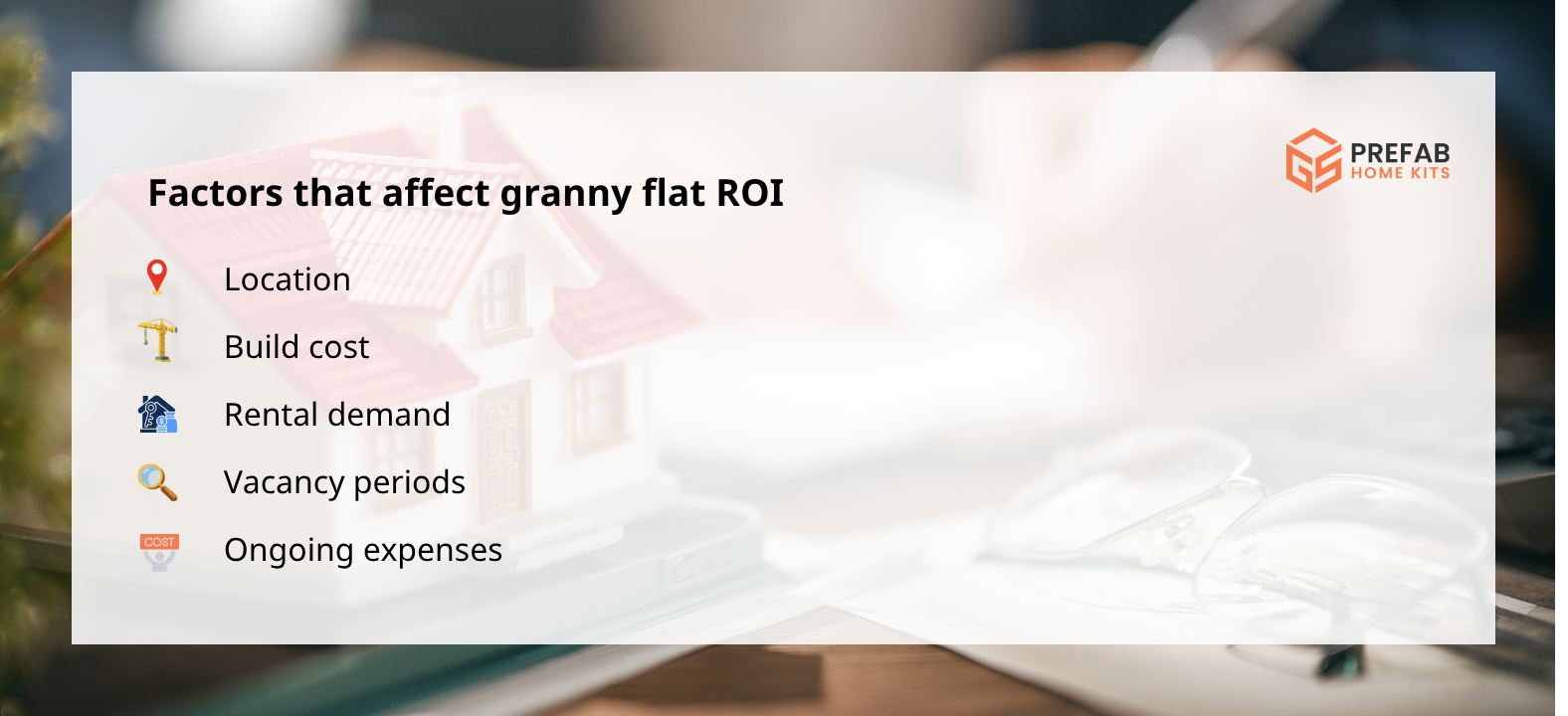
Factors That Affect Granny Flat ROI
While the basic calculation is simple, several factors can influence how quickly your granny flat pays off.
Location
Location plays a major role in granny flat ROI. Areas with high rental demand and limited affordable housing tend to deliver better returns.
If your property is close to transport, schools, or job centres, it is more likely to attract tenants and achieve higher rent.
Build cost
Keeping your build cost under control is one of the most effective ways to improve ROI. A more expensive build means it will take longer to recover your investment.
Choosing a simple, efficient design can help reduce costs without sacrificing functionality.
Rental demand
Even a well-built granny flat can struggle to deliver strong ROI if demand in the area is low. Understanding your local rental market is essential before starting your project.
Vacancy periods
If your granny flat sits empty between tenants, it reduces your total income and extends your payback period.
Minimising vacancy through good pricing and property management can improve your overall return.
Ongoing expenses
Maintenance, insurance, and property management costs all affect your granny flat ROI. While these are usually smaller compared to the initial build cost, they still need to be considered.
Ways to Improve Your ROI
If you want to shorten the payback period and improve your granny flat ROI, there are a few practical approaches to consider.
Choosing the right design is important. A layout that appeals to a wide range of tenants can help you maintain consistent occupancy.
Building in the right location also makes a big difference. Areas with strong rental demand will support better income and lower vacancy risk.
Keeping your costs under control is another key factor. Avoiding unnecessary upgrades and sticking to a clear budget can help you reach profitability sooner.
Finally, managing your property well—whether by yourself or through a professional—can help maintain steady income and reduce downtime.
Long-Term Value Beyond Rental Income
While rental income is the main driver of granny flat ROI, it’s not the only benefit.
A granny flat can also increase the overall value of your property. Buyers often see it as an added feature that provides flexibility and income potential.
Over time, property value growth can add to your total return, even if it’s not part of your immediate payback calculation.
This means your investment may continue to deliver value long after it has paid for itself.
Is Granny Flat ROI Better Than Other Investments?
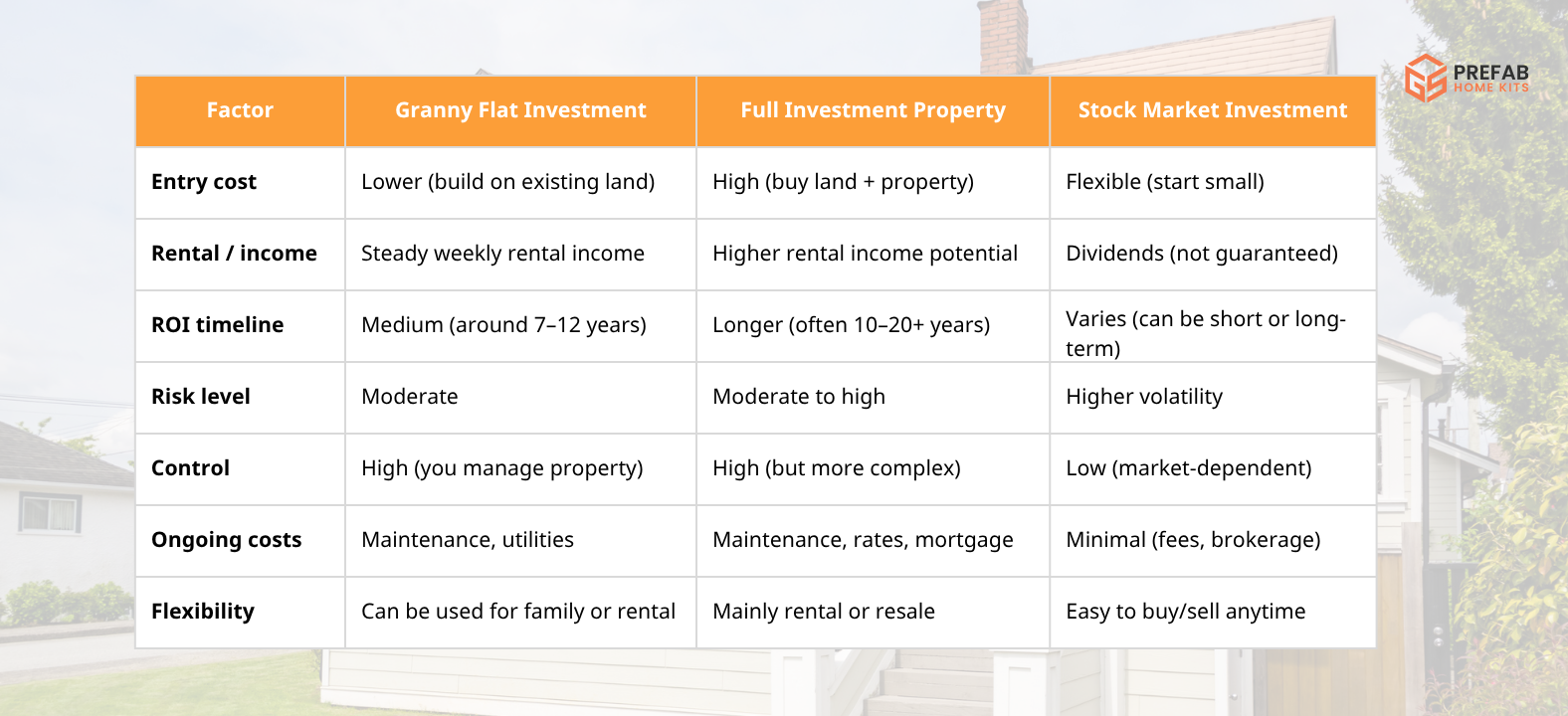
Compared to other property investments, a granny flat can offer a relatively strong ROI, especially because of its lower entry cost.
You don’t need to purchase additional land, and construction costs are generally more manageable than buying a full investment property.
However, it’s important to understand that returns can vary. A granny flat may not generate as much income as a separate house, but it can still provide a steady and reliable return.
For many homeowners, the combination of lower cost and consistent income makes it an attractive option.
Final Thoughts
So, how long does it take for a granny flat to pay off?
In most cases, granny flat ROI falls somewhere between 7 and 12 years, depending on your build cost, rental income, and ongoing expenses.
While it may not be an instant return, a granny flat can provide steady income, increase property value, and offer long-term financial benefits.
The key is to plan carefully, understand your local market, and manage your costs effectively. With the right approach, a granny flat can be a practical and worthwhile investment that continues to deliver value over time.
Get a FREE quote for a granny flat here.
Explore more ideas at our Prefab Home Kits Fanpage.