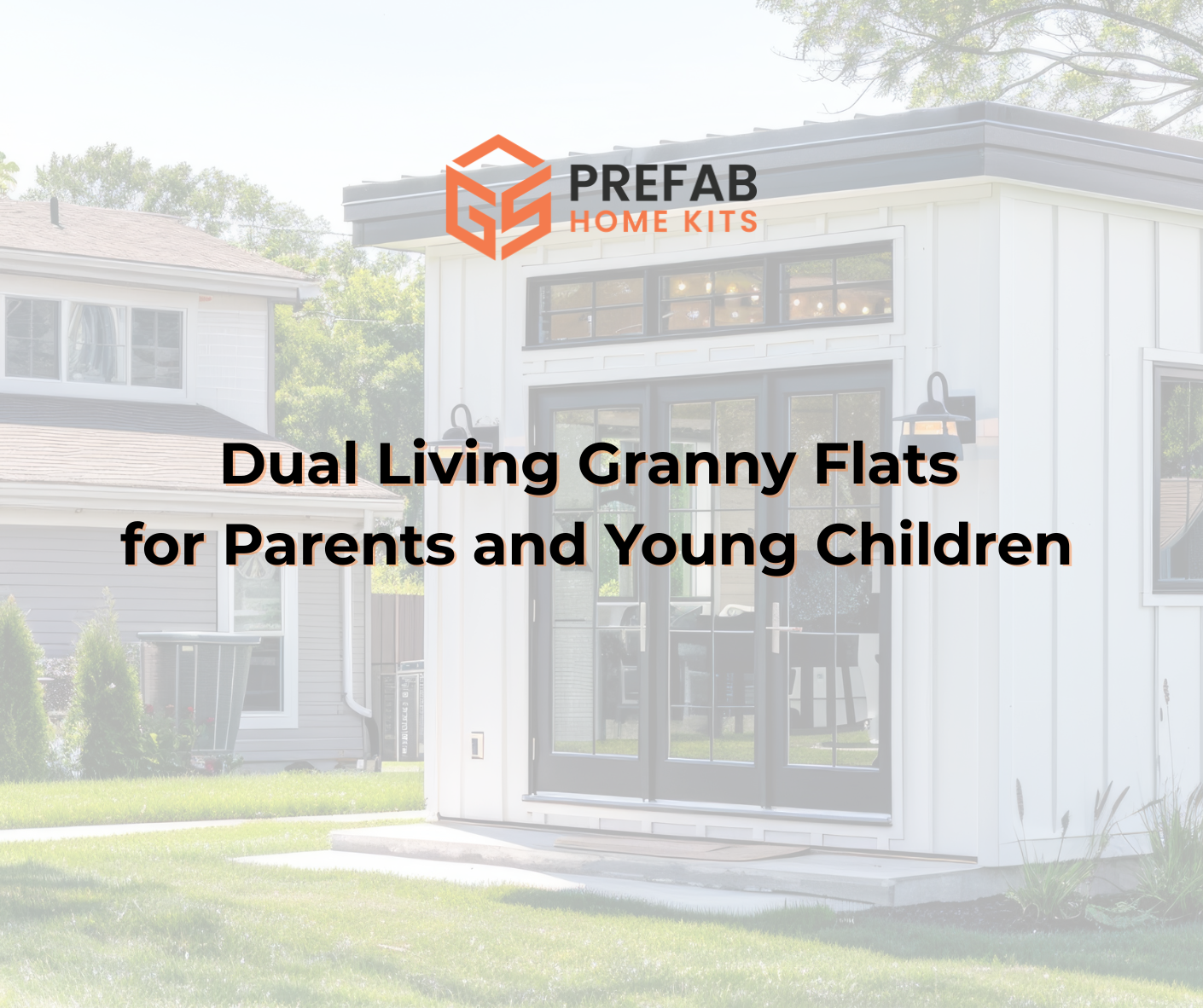
Granny Flat vs Investment Property: Which Is Better?

If you want to grow your wealth through property, you’ve probably considered two common options: building a granny flat or buying an investment property. Both can generate income and increase your financial security over time, but they work in very different ways.
For some homeowners, a granny flat (or a secondary dwelling) is a more affordable and practical option. For others, buying a separate investment property offers greater long-term growth. The right choice depends on your budget, goals, lifestyle, and how much risk you are comfortable with.
This guide compares granny flats and investment properties in a simple and easy-to-understand way, helping you decide which option may suit you better.
What Is a Granny Flat Investment?
A granny flat is a self-contained secondary dwelling built on the same block as your main house. It usually includes a bedroom, bathroom, kitchen, and living area.
Many homeowners build secondary dwellings to generate rental income while making better use of their land. Instead of buying another property, they add a second living space to the property they already own.
This has become increasingly popular across Australia because it offers a lower-cost entry into property investing.
What Is an Investment Property?
An investment property is a separate house, apartment, or unit purchased mainly to earn rental income or benefit from property value growth.
Unlike a granny flat, an investment property sits on its own block or title. This means it usually costs more upfront, but it may also offer greater long-term capital growth depending on the location.
Investment properties are one of the most common ways Australians build wealth through real estate.
Comparing the Upfront Cost of Granny Flat vs Investment Property
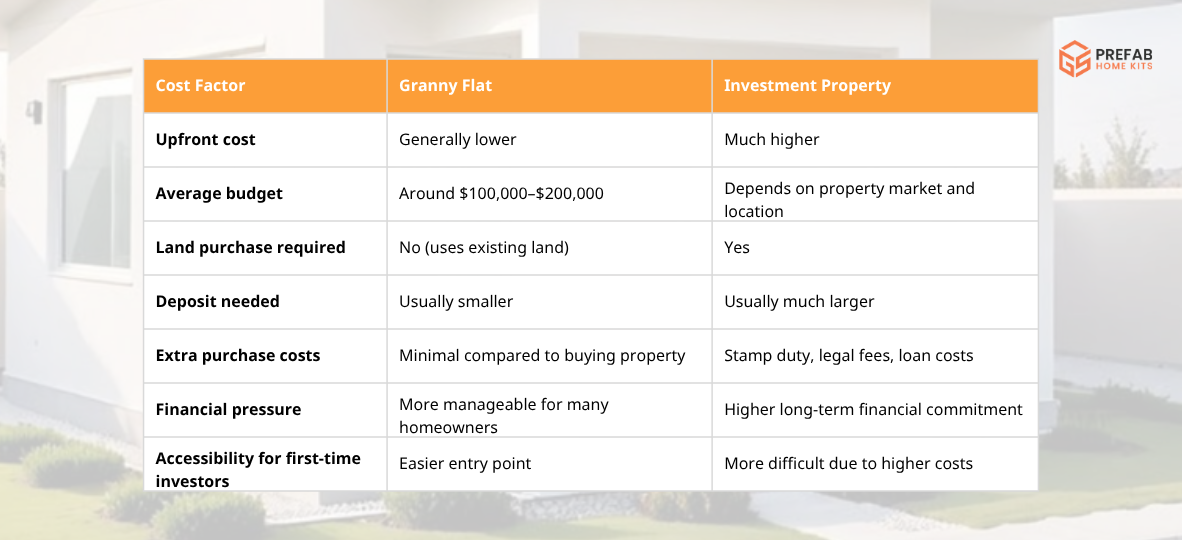
One of the biggest differences between a granny flat and an investment property is the upfront cost.
Building a secondary dwelling is generally much cheaper. Most granny flat projects in Australia cost somewhere between $100,000 and $200,000, depending on the design and site conditions.
Buying an investment property, on the other hand, usually requires a much larger budget. You need to consider the property price, deposit, stamp duty, legal fees, and loan costs.
For homeowners who already own land, a granny flat can be a more accessible option because it avoids the cost of buying another block of land.
Rental Income Potential
Both options can generate rental income, but the amount can vary.
A granny flat typically earns less rent than a full-sized house or apartment because it is smaller. However, because the build cost is lower, the rental yield can still be very attractive.
An investment property may generate higher weekly rent, especially in high-demand areas. However, it also comes with larger mortgage repayments and higher ongoing expenses.
In many cases, secondary dwellings offer strong cash flow relative to the amount invested, while investment properties may focus more on long-term growth.
Value Growth of Granny Flat and Property Investment
Capital growth is one area where investment properties often have an advantage.
Because an investment property usually includes its own land, it has greater potential for long-term value growth. In Australia, land value tends to increase over time, especially in desirable locations.
A granny flat can still increase the value of your existing property, but the growth may not be as significant as owning a separate property altogether.
That said, adding a secondary dwelling can still make your home more appealing to future buyers due to its rental potential and flexible living space.
Risk and Financial Pressure
Every investment comes with some level of risk, and it’s important to compare the financial pressure involved.
A granny flat generally involves lower financial risk because the upfront cost is smaller. If you already own your home, you may only need a smaller loan or savings to fund the build.
An investment property usually requires a larger mortgage, which means higher repayments and greater exposure to interest rate changes.
For first-time investors or homeowners who prefer a more manageable investment, a secondary dwelling may feel less financially stressful.
Maintenance and Management
Both granny flats and investment properties require ongoing maintenance, but the level of management can differ.
With a granny flat, you are managing a rental space on your own property. This can make maintenance easier because everything is close by. However, it can also create privacy concerns if tenants live close to your home.
An investment property gives more separation between you and the tenant, especially if it’s in another suburb or city. However, distance can make management more difficult and may require a property manager.
The right option depends on how involved you want to be as a landlord.
Flexibility Over Time
A major advantage of a granny flat is flexibility. The space can be used in different ways over time depending on your needs.
You might rent it out now, then later use it for family members, guests, or even as a home office. This flexibility gives homeowners more control over how the space is used.
An investment property is usually focused mainly on rental income or resale value. While it can still offer flexibility, it is often treated more strictly as a financial asset.
Approval and Regulations
Building a granny flat requires council approval and compliance with local regulations. Rules around size, setbacks, and land use can affect what you are allowed to build.
Investment properties also come with regulations, but the process is usually more straightforward because the property already exists.
For some homeowners, dealing with approvals and construction is an extra challenge that makes buying an investment property feel simpler.
Which Option Offers Better ROI?
When comparing return on investment, both options have strengths.
A granny flat often delivers strong rental yield because the initial investment is lower. In some areas, the rental return compared to build cost can be very attractive.
An investment property may offer slower cash flow initially but stronger long-term capital growth.
If your goal is immediate rental income and manageable costs, a secondary dwelling may provide better short-term ROI. If your focus is long-term wealth growth, an investment property may offer greater potential over time.
Read more: Granny Flat ROI: How Long Does It Take to Pay Off?

Who Should Consider a Granny Flat?
A granny flat may suit you if you already own a property with enough land and want a lower-cost way to generate income.
It’s also a good option if you value flexibility and want the ability to use the space for family or personal needs later on.
Homeowners who prefer smaller financial commitments and simpler investments often find secondary dwellings appealing.
Who Should Consider an Investment Property?
An investment property may be the better choice if you are focused on long-term capital growth and have the financial capacity for a larger investment.
It may also suit investors who want complete separation between their home and rental property.
People who are comfortable with larger loans and longer-term strategies often prefer this approach.
Final Thoughts
So, which is better: a granny flat or an investment property?
The truth is that both can be good investments, but they suit different goals and financial situations.
A granny flat offers a more affordable and flexible way to generate rental income while making better use of your existing land. An investment property may require more money upfront, but it can provide stronger long-term growth potential.
The best choice comes down to your budget, risk tolerance, and what you want from your investment. By understanding the pros and limitations of each option, you can make a decision that supports your long-term financial goals.
Get a FREE quote for a granny flat here.
Explore more ideas at our Prefab Home Kits Fanpage.