How to Maximise Rental Yield from a Granny Flat
Building a granny flat can be a smart way to generate extra income from your property. But simply building one does not automatically guarantee strong returns. If you want to get the best possible rental yield, you need to think carefully about design, location, tenant appeal, and long-term management.
The good news is that there are many practical ways to improve the earning potential of a granny flat, or a secondary dwelling, without dramatically increasing costs. Small decisions made early can have a big impact on how much rent you can charge and how often the property stays occupied.
This guide explains how to maximise rental yield from a granny flat in a simple and easy-to-understand way.
What Does Rental Yield of Granny Flat Mean?
Before looking at strategies, it helps to understand what rental yield actually means.
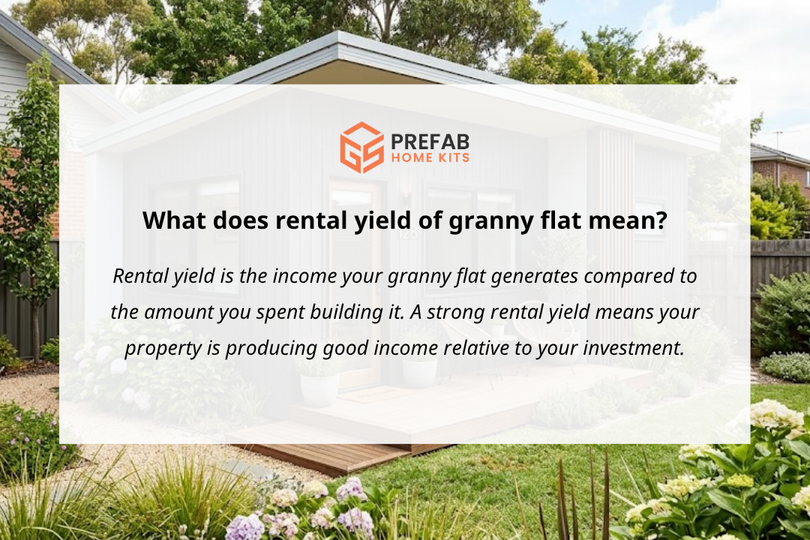
Rental yield is the income your granny flat generates compared to the amount you spent building it. A strong rental yield means your property is producing good income relative to your investment.
For example, a granny flat that costs less to build but still attracts solid weekly rent may deliver a better yield than a more expensive property.
Maximising rental yield is really about increasing income while keeping unnecessary costs under control.
Choose the Right Location
Location is one of the biggest factors affecting rental demand. Even the best-designed granny flat may struggle to attract tenants if it’s in an area with low demand.
Properties close to public transport, schools, shops, and employment areas are usually more appealing to renters. Areas with high housing costs also tend to have stronger demand for dwellings because tenants are looking for more affordable options.
Before building, it’s worth researching rental demand in your suburb. Understanding what tenants are looking for can help you make better decisions from the start.
Design for Tenant Appeal
A granny flat built for rental purposes should be designed with tenants in mind, not just personal taste.
Good layout and functionality matter more than expensive finishes. Tenants want a space that feels comfortable, practical, and easy to live in.
An open-plan design can make a smaller granny flat feel larger and brighter. Good natural light, storage space, and a functional kitchen also make a big difference.
A modern and clean appearance can help your granny flat stand out in the rental market, even without luxury upgrades.
Keep the Layout Practical
The layout of your granny flat affects both tenant appeal and rental value.
In many areas, two-bedroom granny flats tend to attract wider interest than one-bedroom designs. They appeal to couples, small families, or even housemates, which can increase demand and rental income.
However, the right layout depends on your local market. In some areas, a well-designed one-bedroom dwelling may still perform very well.
The key is to balance construction cost with rental potential.
Create Privacy for Tenants
Privacy is a major factor when renting out a granny flat. Because it shares land with the main house, tenants may worry about noise or lack of separation.
Simple design choices can improve privacy significantly. Separate entrances, fencing, landscaping, and careful window placement all help create a more independent living experience.
The more private and comfortable the space feels, the more attractive it becomes to potential tenants.
Add Features That Increase Value
You do not need expensive luxury upgrades to improve rental yield, but certain features can make your granny flat more appealing.
Air conditioning, built-in storage, modern lighting, and functional outdoor space are all attractive to renters. Energy-efficient features can also help reduce utility costs, which many tenants appreciate.
The goal is to focus on features that improve everyday living rather than spending money on unnecessary extras.
Furnished or Unfurnished Granny Flat?
Whether to offer a furnished or unfurnished granny flat depends on your target market.
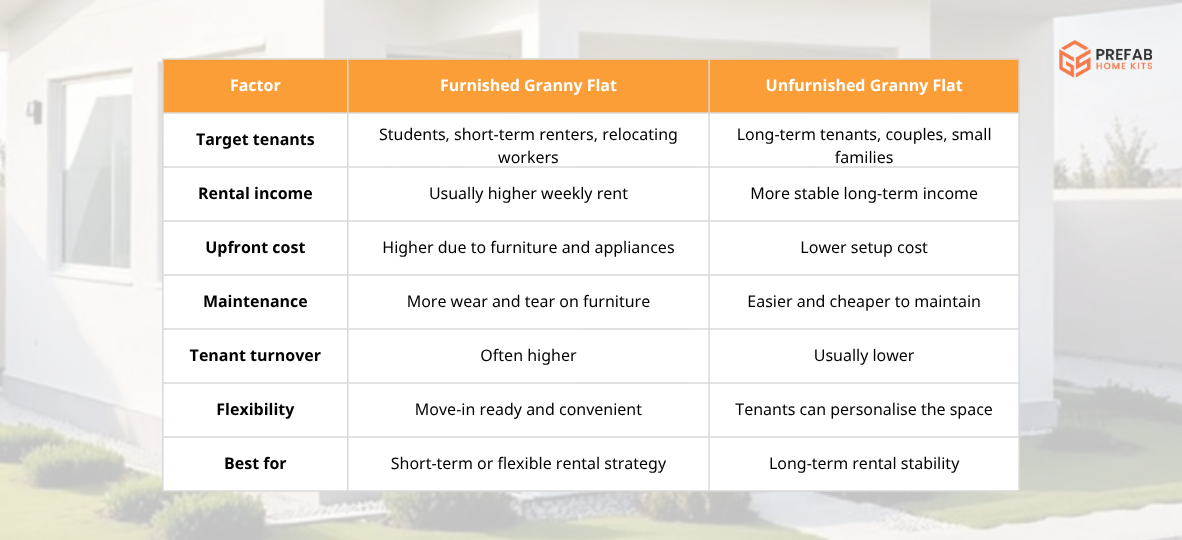
A furnished granny flat may attract students, short-term renters, or people relocating for work. It can sometimes achieve higher weekly rent, but it also involves higher upfront costs and more maintenance.
An unfurnished dwelling usually attracts long-term tenants and may be easier to manage over time.
Understanding who you want to rent to can help you choose the best option.
Price the Rent Correctly
Setting the right rental price is essential for maximising yield.
If you price your granny flat too high, it may sit vacant for longer periods. If you price it too low, you lose potential income.
Researching similar secondary dwellings in your area can help you understand current market rates. A competitive price combined with a well-presented property often leads to faster occupancy and more stable income.
Consistent rental income is usually more valuable than aiming for unrealistically high rent.
Reduce Vacancy Periods
Vacancy periods can significantly reduce rental yield. Every week your granny flat sits empty is lost income.
Keeping the property clean, well-maintained, and attractively presented helps reduce vacancy risk. Responding quickly to tenant enquiries and advertising professionally can also help secure tenants faster.
Long-term tenants are particularly valuable because they reduce turnover and the costs associated with finding new renters.
Keep Maintenance Costs Under Control
Maximising rental yield is not just about increasing income—it’s also about managing expenses.
Choosing durable materials and simple finishes can reduce long-term maintenance costs for your granny flat. Cheap materials may save money upfront but often lead to more repairs later.
A low-maintenance property is easier and more cost-effective to manage over time.
Understand Local Regulations
Before renting out a granny flat, it’s important to understand local regulations and approval requirements.
Some areas have rules around rental use, parking, or occupancy. Failing to comply with these regulations can create legal issues and affect your investment.
Making sure your secondary dwelling is properly approved and compliant protects your rental income in the long run.
Think Long-Term
A successful granny flat investment is usually built on long-term planning rather than quick profits.
Rental markets can change over time, so it’s important to build a granny flat that remains practical and appealing in the future. Flexible layouts and timeless design choices tend to perform better over the long term.
Thinking beyond immediate returns can help you create a more stable and reliable investment.
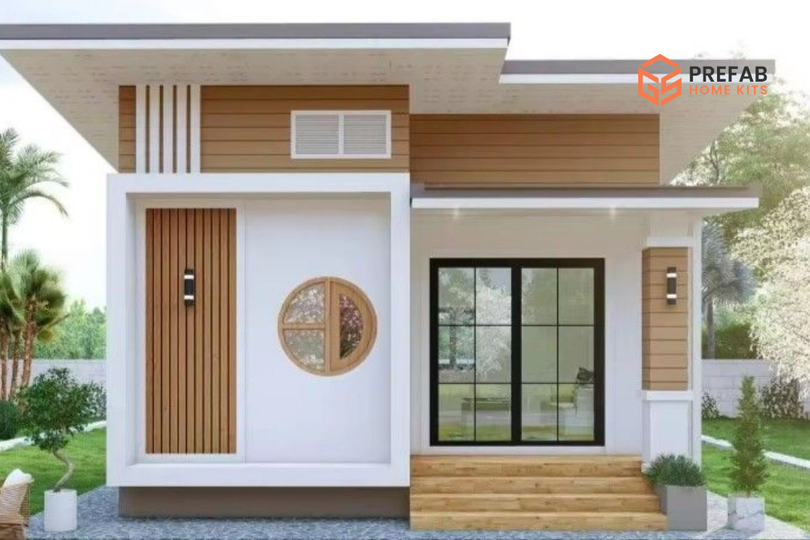
Is a Granny Flat a Good Rental Investment?
For many homeowners, a granny flat can deliver strong rental yield because the upfront cost is relatively low compared to buying a separate investment property.
It allows you to generate income from land you already own while increasing the flexibility and value of your property.
However, success depends on careful planning. A well-designed secondary dwelling in the right location with strong tenant appeal is much more likely to achieve good rental returns.
Read more: Is a Granny Flat a Good Investment in Australia?
Final Thoughts
Maximising rental yield from a granny flat is about more than just collecting rent. It requires smart decisions around design, location, pricing, and long-term management.
By focusing on practicality, tenant comfort, and cost control, you can improve both occupancy and rental income over time.
This type of house may be smaller than a traditional investment property, but with the right approach, it can still deliver strong and reliable returns while making the most of your existing property.
Get a FREE quote for a granny flat here.
Explore more ideas at our Prefab Home Kits Fanpage.