Pros and Cons of a Prefabricated Home: What Homeowners Should Know
If you’re planning to build your dream home, you’ve probably come across the idea of a prefabricated home. With growing popularity across Australia and beyond, prefab homes are often seen as a modern, efficient alternative to traditional construction.
But like any building option, a prefabricated home comes with both advantages and limitations. Understanding the pros and cons can help you decide whether this approach suits your lifestyle, budget, and long-term plans.
This guide breaks things down in a simple, practical way so you can make a confident decision.
What Is a Prefabricated Home?
A prefabricated home is a house where major structural components are built in a factory and then transported to the site for assembly. These components can include wall panels, floors, roof systems, or even full modules.
Once delivered, the home is installed on a prepared foundation and connected to utilities. Even though the construction process is different, prefabricated homes are permanent structures and must meet the same building standards as traditional homes.
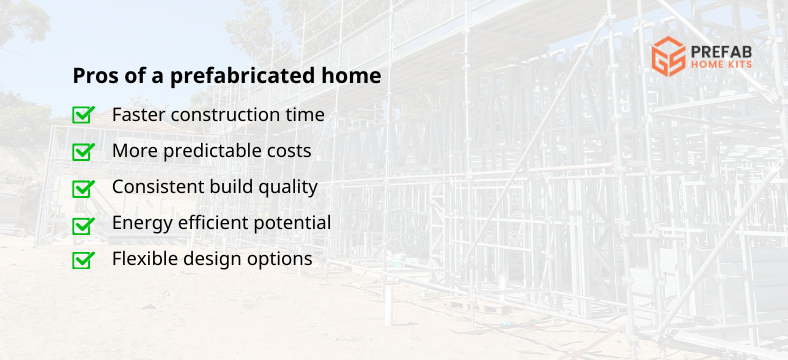
Pros of a Prefabricated Home
Faster Construction Time
One of the biggest advantages of a prefabricated home is speed. Because the structure is built in a factory while the site is being prepared, the overall timeline can be shorter than traditional construction.
This means you may be able to move in sooner, which is especially helpful if you are paying rent during the build.
More Predictable Costs
A prefabricated home often offers better cost certainty. Factory production allows builders to estimate material and labour costs more accurately, reducing the chance of unexpected price changes during construction.
For homeowners working within a fixed budget, this predictability can make financial planning easier.
Consistent Build Quality
Factory-controlled construction provides a stable environment for building. Materials are protected from weather, and processes are standardised, which can lead to consistent workmanship.
This level of control helps ensure that each part of the home is built according to precise specifications.
Energy Efficiency Potential
Many prefabricated homes are designed with energy efficiency in mind. Precise insulation installation and improved airtightness can help maintain indoor temperatures and reduce energy use.
Over time, this can lead to lower electricity bills and improved comfort.
Find out more about how a prefabricated home can save your monthly energy bill here: Energy Efficiency of Prefabricated Homes: How It Work
Flexible Design Options
Modern prefab homes are more flexible than many people expect. Homeowners can often customise layouts, finishes, and exterior styles during the design phase.
This allows you to create a home that suits your needs while still benefiting from efficient construction.
Cons of a Prefabricated Home
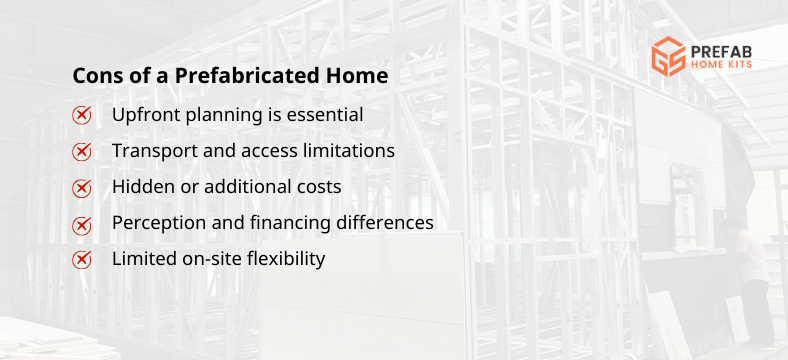
Upfront Planning Is Essential
One of the main challenges of a prefabricated home is that most design decisions must be finalised before manufacturing begins. Making changes later in the process can be difficult or costly.
For homeowners who prefer to adjust plans during construction, this may feel restrictive.
Transport and Access Limitations
Because prefab components are delivered from a factory, site access is important. Narrow roads, steep blocks, or remote locations can make delivery more complex.
Transport and crane installation costs can also add to the overall budget.
Hidden or Additional Costs
While the base price of a prefabricated home may seem attractive, additional costs such as site preparation, foundations, utility connections, and council approvals must be included.
Without proper planning, these costs can catch homeowners by surprise. Read more to understand about the hidden cost of prefabricated home: Hidden Costs of a Prefabricated Home You Should Know.
Perception and Financing Differences
Although prefabricated homes are widely accepted today, some lenders or buyers may still be more familiar with traditional construction.
This can sometimes affect financing options or resale perceptions, depending on the location and market.
Limited On-Site Flexibility
Traditional homes allow for adjustments during construction, but prefabricated homes rely on detailed upfront planning. Once production starts, changes are harder to make.
This means homeowners need to be confident in their design choices early on.
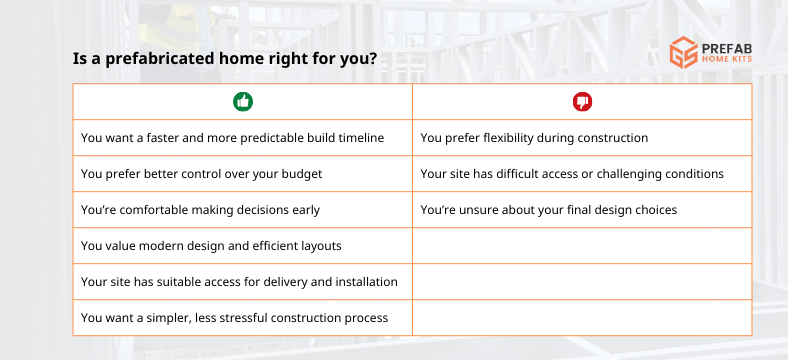
Is a Prefabricated Home Right for You?
Choosing a prefabricated home depends on your priorities, lifestyle, and how you prefer to approach the building process. While prefab homes offer many advantages, they are not the perfect fit for everyone. Here are some key points to help you decide:
You want a faster and more predictable build timeline
If you prefer a clear schedule and want to move into your home sooner, a prefabricated home can be a strong option. Factory construction allows much of the work to happen at the same time as site preparation, reducing overall delays.
You prefer better control over your budget
A prefabricated home often provides more predictable costs compared to traditional builds. If staying within budget is a top priority, this structured pricing approach can help you avoid unexpected financial surprises.
You’re comfortable making decisions early
Prefab homes require most design choices to be finalised before manufacturing begins. If you like planning ahead and making clear decisions upfront, this process will feel straightforward and efficient.
You value modern design and efficient layouts
Many prefabricated homes are designed with smart space planning, open layouts, and energy efficiency in mind. If you’re looking for a contemporary, functional home, prefab designs can suit your needs well.
Your site has suitable access for delivery and installation
Prefabricated homes rely on transporting large components to the site. If your land has good road access and enough space for installation equipment, the process will be much smoother.
You want a simpler, less stressful construction process
With fewer on-site variables such as weather delays and trade coordination, prefabricated homes can offer a more streamlined and organised building experience.
On the other hand, a prefabricated home may be less suitable if:
You prefer flexibility during construction
If you want to make design changes as the build progresses, traditional construction may give you more freedom.
Your site has difficult access or challenging conditions
Steep blocks, narrow roads, or remote locations can make delivery and installation more complex and costly.
You’re unsure about your final design choices
Because prefab construction relies on upfront planning, it’s important to feel confident in your layout and design before production starts.
Conclusion
A prefabricated home offers many advantages, including faster build times, cost predictability, and strong design potential. At the same time, it requires careful upfront planning and consideration of additional costs such as transport and site preparation.
By weighing the pros and cons, homeowners-wanna-be can decide whether prefab construction aligns with their goals. With the right planning and guidance, a prefabricated home can be a practical and rewarding way to create a modern living space.
Get a FREE quote for your dream house here.
Explore more ideas at our Prefab Home Kits Fanpage.