Do You Need Permission to Build a Granny Flat?
If you’re planning to build a granny flat on your property, one of the first things you need to understand is whether you need permission. The short answer is yes, in most cases, you will need some form of approval before you can start building.
The exact process depends on where you live in Australia, but there are clear rules and steps you’ll need to follow. Understanding these early can save you time, money, and stress later on.
This guide explains how approvals work in simple terms, so you know what to expect before starting your granny flat project.
Why Permission Is Required
A granny flat is considered a secondary dwelling, which means it is a separate living space built on the same land as your main house. Because it affects land use, infrastructure, and safety, local councils regulate how and where it can be built. Without proper approval, you could face fines, delays, or even be required to remove the structure. That’s why getting permission is an essential first step.
These rules are there to make sure that:
- Buildings are safe and meet construction standards
- The property is not overcrowded
- Access, drainage, and services are properly managed
- The design fits within the surrounding area
Types of Approval for a Granny Flat
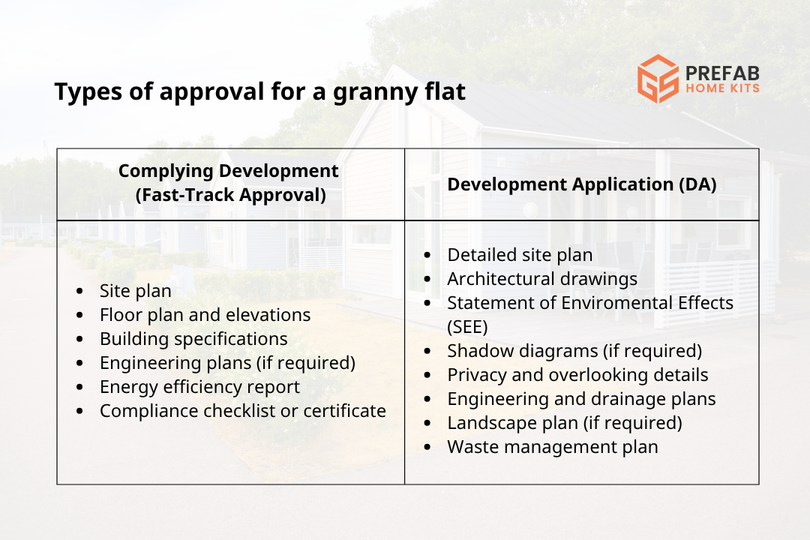
In Australia, there are generally two main pathways to get approval for a granny flat. The one you use depends on your location and whether your project meets certain criteria.
Complying Development (Fast-Track Approval)
This is the quicker and more straightforward option. If your granny flat meets specific rules set by the government, it can be approved as a complying development.
Instead of going through a full council assessment, your plans are checked against a standard set of requirements. If everything meets those standards, approval can be granted relatively quickly.
This pathway is popular because it reduces waiting time and simplifies the process.
Development Application (DA)
If your granny flat does not meet the requirements for fast-track approval, you will need to submit a Development Application (DA) to your local council.
This process involves a more detailed review of your plans. The council will assess factors such as design, impact on neighbours, and how the project fits within local planning rules.
A DA usually takes longer than complying with development approval, but it allows for more flexibility in design.
Read more: Cost of Building a Granny Flat: What You Need to Know
Basic Requirements You Need to Meet
While the exact rules vary by state and council, there are some common requirements that apply to most granny flat projects.
Minimum lot size
Your property must meet a minimum land size requirement. In many areas, this is around 450m², but it can vary depending on local regulations.
Maximum size of the granny flat
There is usually a limit on how large your granny flat can be. In many cases, the maximum internal area is around 60m², although this may differ depending on your location.
Setbacks and positioning
Setbacks refer to how far your granny flat must be from property boundaries, fences, and the main house. These rules help maintain privacy and ensure safe spacing between structures.
Access and services
Your granny flat must have proper access, as well as connections to essential services such as water, electricity, and sewer. These need to be planned carefully during the design stage.
How Long Does Approval Take?
The timeline for approval depends on which pathway you use.
For complying development, approval can sometimes be granted within a few weeks if all requirements are met.
For a Development Application, the process can take several weeks to a few months. This depends on the complexity of your design and how quickly all documents are submitted and reviewed.
Planning ahead is important, as approval time can affect your overall project timeline.
What Documents Do You Need?
To apply for approval for a granny flat, you will need to provide several documents. These help the council or certifier understand your project and ensure it meets regulations. Having complete and accurate documents can help speed up the approval process and reduce the chance of delays.
Common documents include:
- Site plans showing your property layout
- Floor plans and elevations
- Engineering details
- Reports on drainage or environmental impact (if required)
Can You Build Without Approval?
Technically, no, you should not build a granny flat without proper approval.
Building without permission can lead to serious consequences, including fines and legal action. In some cases, you may be required to modify or remove the structure entirely.
Even if the build is completed, it may cause issues later when you try to sell your property, as unapproved structures can affect property value and legal compliance.
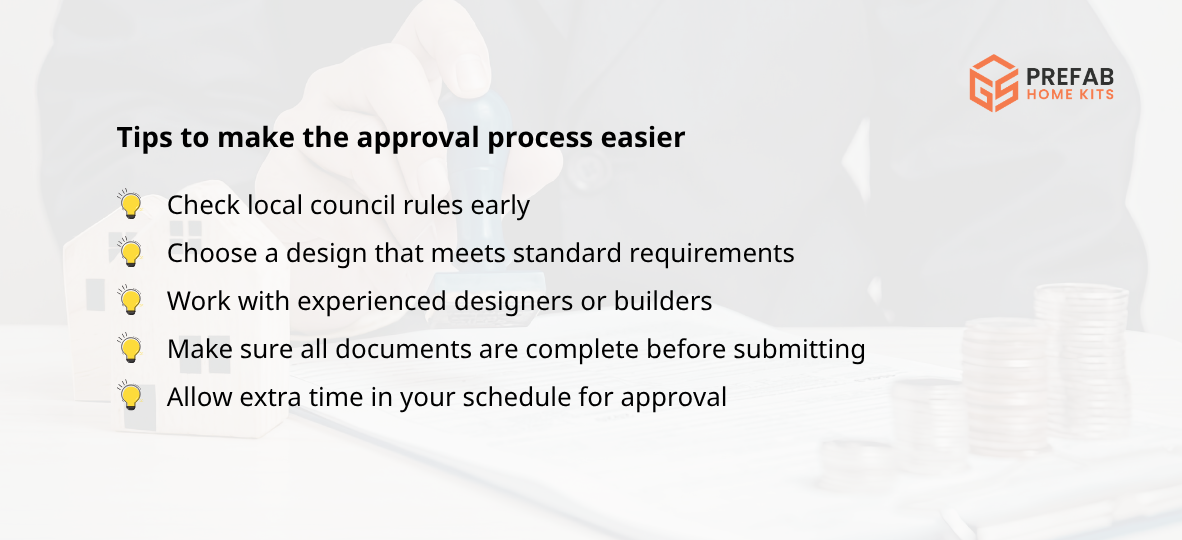
Tips to Make the Approval Process Easier
Getting approval for a granny flat doesn’t have to be complicated, but it does require some planning. Many delays and unexpected costs happen simply because small details are missed early on. If you approach the process step by step and stay organised, it becomes much more manageable.
Below are some practical ways to make the approval process smoother and faster.
Check local council rules early
Before you design anything, it’s important to understand the rules that apply to your area. Every council has its own requirements for building a granny flat, including limits on size, placement, and land use.
By checking these rules early, you avoid designing something that cannot be approved. This saves time, money, and frustration later on. It also helps you decide whether your project can go through a faster approval pathway, such as complying development.
You don’t need to know every detail, but having a clear understanding of the basics will give you a strong starting point.
Choose a design that meets standard requirements
One of the easiest ways to speed up approval is to choose a design that already fits within common regulations. Simple, standard layouts are more likely to meet the criteria for fast-track approval.
A straightforward granny flat design, such as a single-storey layout with a reasonable size and clear setbacks, reduces the chance of issues during assessment. Complex designs, on the other hand, may require more review and take longer to approve.
If your goal is to save time and avoid complications, keeping the design practical and compliant from the beginning is a smart approach.
Work with experienced designers or builders
Working with professionals who have experience in granny flat projects can make a big difference. They usually understand local council requirements and know how to prepare plans that meet approval standards.
An experienced designer or builder can help you avoid common mistakes, such as incorrect measurements, missing details, or non-compliant layouts. They can also guide you through the approval process and handle some of the paperwork on your behalf.
While it may cost a bit more upfront, it often saves time and reduces the risk of delays or rejections.
Make sure all documents are complete before submitting
Incomplete or unclear documents are one of the most common reasons for delays in approval. When submitting your application for a granny flat, it’s important to make sure everything is accurate and fully prepared.
This includes site plans, floor plans, engineering details, and any required reports. If something is missing or incorrect, the council or certifier may ask for revisions, which can slow the process down.
Taking the time to double-check your documents before submission can help you avoid unnecessary back-and-forth and keep things moving smoothly.
Allow extra time in your schedule for approval
Even with good planning, the approval process can take time. It’s important to build some flexibility into your timeline so you’re not rushing or putting pressure on yourself.
For a granny flat, approval times can vary depending on the type of application and how complex the project is. Unexpected delays can happen, especially if additional information is requested.
By allowing extra time from the start, you can manage the process more calmly and avoid stress if things take longer than expected.
Do Rules Change Between Locations?
Yes, rules for building a granny flat can vary depending on your state and local council.
While many areas in Australia have similar guidelines, details such as size limits, setbacks, and approval pathways may differ. That’s why it’s important to check the specific requirements for your location.
Relying on general information alone can lead to mistakes, so always confirm the details before making decisions.
Is It Hard to Get Approval?
In most cases, getting approval for a granny flat is not difficult if your design follows the rules.
Simple, standard designs are more likely to be approved quickly, especially under complying development. More complex designs may take longer but are still possible with the right planning.
The key is to understand the requirements and work within them from the beginning.
Read more: Financing a Granny Flat: Loans, Grants & Options
Final Thoughts
So, do you need permission to build a granny flat? In almost all cases, yes. Approval is a necessary part of the process, and it helps ensure your build is safe, legal, and suitable for your property.
While the process may seem complex at first, it becomes much easier when you understand the steps involved. By checking the rules early, preparing the right documents, and choosing a suitable design, you can move forward with confidence.
A well-planned granny flat project starts with proper approval and getting this step right sets the foundation for everything that follows.
Get a FREE quote for a granny flat here.
Explore more ideas at our Prefab Home Kits Fanpage.