Granny Flat: Pros and Cons You Should Know
If you’re thinking about adding a granny flat to your property, you’re not alone. More and more homeowners in Australia are choosing this option as a way to create extra space, support family, or generate rental income.
At first glance, a granny home seems like a smart and practical idea. It’s usually cheaper than buying a new house and offers a lot of flexibility. But like any property decision, it comes with both advantages and disadvantages.
This guide walks you through the real pros and cons of building granny flats, so you can decide if it’s the right move for you.
What Is a Granny Flat?
A granny flat, or a granny home, is a self-contained living space built on the same block as your main house. It usually includes a bedroom, bathroom, kitchen, and living area, making it suitable for independent living.
People use granny homes for different reasons. Some build them for aging parents, others for adult children, and many use them as rental properties. This flexibility is one of the biggest reasons they’ve become so popular.
Read more: What Is a Granny Flat? Everything You Need to Know in Australia
The Main Benefits of a Granny Flat
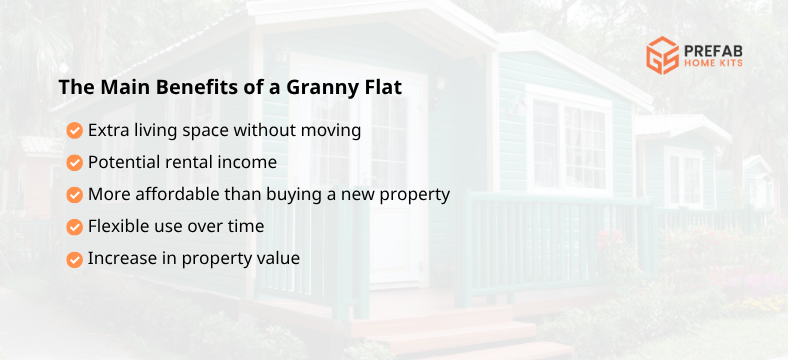
There are several reasons why a granny flat can be a great addition to your property. Many of these benefits are both practical and financial.
Extra living space without moving
One of the biggest advantages of granny flats is that it gives you more space without needing to move house. Instead of going through the stress and cost of buying a new property, you can make better use of the land you already own.
This is especially useful if your family is growing or if you need a separate space for work or guests.
Potential rental income
Granny flats can also be a source of steady income. In many areas of Australia, you can rent out a granny home and earn weekly rental returns.
This income can help cover the cost of building granny flats or contribute to your household expenses over time. For many homeowners, this is one of the biggest reasons to invest in one.
More affordable than buying a new property
Compared to buying another house, building a granny flat is much more affordable. You don’t need to pay for additional land, and construction costs are generally lower.
This makes it a more accessible option for homeowners who want to invest in property without taking on a large loan.
Flexible use over time
A granny home is not limited to one purpose. It can be used in different ways depending on your needs at different stages of life.
For example, it can start as a space for family members, then later become a rental property or a home office. This flexibility adds long-term value to your property.
Increase in property value
Adding a granny flat can increase the overall value of your property. Buyers often see it as a bonus feature because it provides additional living space or income potential.
While the exact increase depends on location and design, well-built granny flats can make your property more attractive in the market.
The Downsides of a Granny Flat
While there are many benefits, it’s important to look at the potential drawbacks as well. A granny home is still a significant investment, and it may not suit every situation.
Upfront cost
Even though it’s cheaper than buying a house, building granny flats still require significant upfront costs. Depending on the design and location, it can range from $100,000 to $200,000 or more.
This means you need a clear budget and possibly financing, which can be a barrier for some homeowners.
Limited space
A granny home is smaller than a standard house, so space can be limited. This may not be suitable for larger families or people who need more room.
Design becomes very important here, as poor layout can make the space feel cramped.
Privacy concerns
Because granny flats are built on the same block as the main house, privacy can sometimes be an issue.
If you plan to rent it out, both you and the tenant will need to share the same property, which may not suit everyone. Careful planning of layout and access can help reduce this issue, but it’s still something to consider.
Council regulations and approvals
Building granny homes requires approval from your local council, and there may be rules about size, location, and usage.
These regulations can vary depending on where you live, and they can sometimes limit what you are allowed to build. The approval process can also take time and add to your overall cost.
Ongoing maintenance
Like any part of your property, a granny flat requires ongoing maintenance. This includes repairs, cleaning, and general upkeep.
If you rent it out, you may also need to manage tenants and deal with any issues that come up. While this is manageable, it does require time and effort.
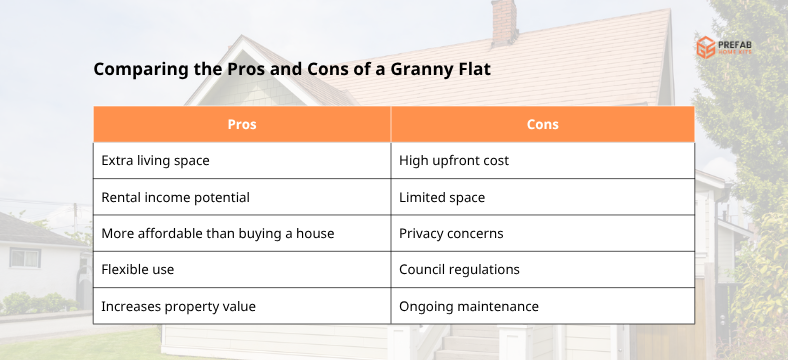
Comparing the Pros and Cons of a Granny Flat
To make things clearer, here’s a simple comparison of the main advantages and disadvantages of a granny flat. This table gives you a quick overview, but the right choice depends on your personal situation.
Is a Granny Flat Right for You?
Deciding whether to build a granny flat comes down to your goals, budget, and lifestyle.
If you already own land and want to make better use of it, a granny home can be a smart investment. It works well if you’re looking for extra space, rental income, or a flexible living solution.
However, if you need more space, complete privacy, or don’t want to deal with approvals and construction, it may not be the best option.
Read more: Types of Granny Flats: A Simple Guide for Homeowners
Tips Before You Decide
Before committing to building granny flats, it’s worth taking a bit of time to plan carefully.
- Think about how you will use the space long-term
- Set a realistic budget, including hidden costs
- Check local council regulations early
- Consider privacy and layout carefully
These steps can help you avoid common mistakes and make a better decision.
Final Thoughts
A granny flat can be a practical and valuable addition to your property, offering both financial and lifestyle benefits. It gives you the flexibility to adapt your space as your needs change, while also providing potential income.
At the same time, it’s important to be aware of the costs, limitations, and responsibilities that come with it.
By understanding both the pros and cons, you can make a more informed decision and choose an option that works best for your situation.
Get a FREE quote for a granny flat here.
Explore more ideas at our Prefab Home Kits Fanpage.